
What to Do When the Flat Roof on Your H Street Rowhome Starts Leaking
A dripping ceiling in your H Street rowhome signals more than a simple roof issue. Flat roofs in DC’s older row houses often fail during heavy summer storms or winter freeze-thaw cycles. Water travels fast through shared party walls and can soak insulation within hours. Acting quickly stops structural damage and mold growth. DC Department of Buildings.
Flat roofs on H Street rowhomes typically use EPDM rubber or modified bitumen membranes. These materials last 20-30 years but fail when seams split or flashing corrodes. The first sign often appears as a water stain on the ceiling below. By then, the roof deck may already be saturated. Fast Water Extraction for Commercial Offices in Downtown DC.
Emergency Response Steps for a Leaking Flat Roof
- Contain the Water
Place buckets under active drips. Move electronics and valuables away from affected areas. Water spreads quickly in shared-wall construction common to H Street. Emergency Water Damage Cleanup for Capitol Hill Rowhouses.
- Minimize Roof Traffic
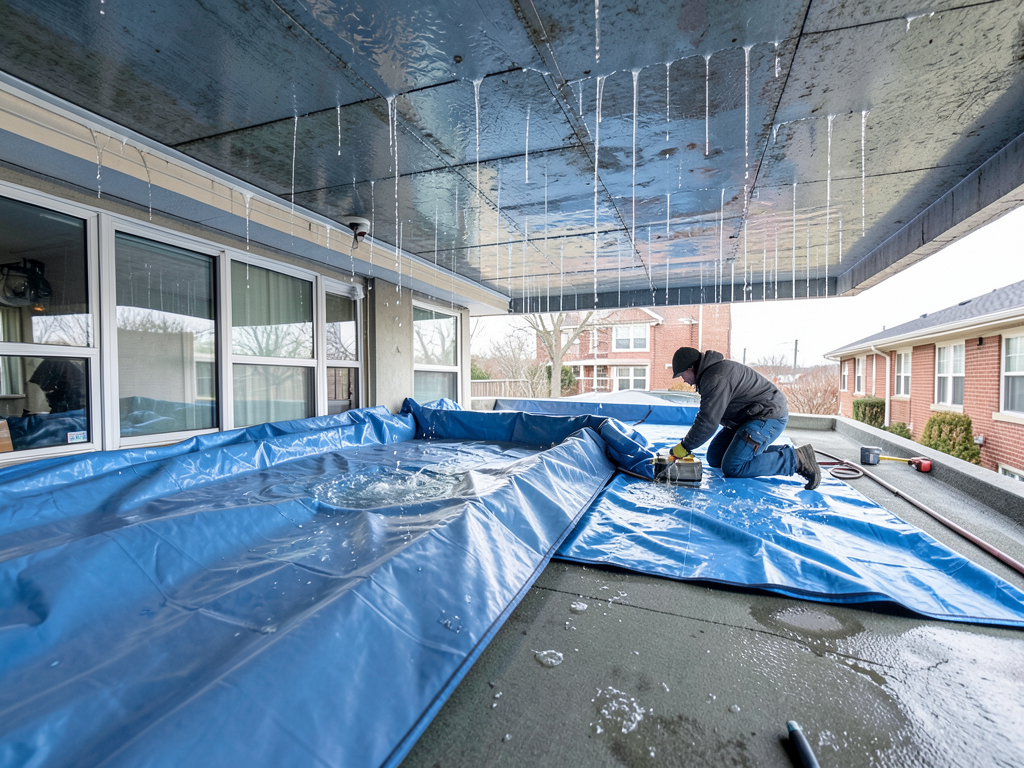
Avoid walking on the wet roof. Saturated insulation can collapse under weight. If safe, cover the leak with a tarp from the ground using a long pole.
- Call for Professional Help
Time matters. Call (771) 223-8077 for emergency response. We arrive within 60 minutes for DC metro locations.
During a recent storm, a client on the 1300 block of H Street NE called at 2 AM. Water poured through a ceiling light fixture. Our team arrived within 45 minutes, stopped the active leak, and began structural drying before mold could establish. Water Damage Restoration Bethesda.
Common Causes of Flat Roof Leaks in DC Row Homes
DC’s climate creates unique challenges for flat roofs. Summer humidity causes thermal expansion in roofing materials. Winter freeze-thaw cycles force water into tiny cracks, widening them over time. H Street rowhomes share another vulnerability: aging parapet walls where roof meets wall.
Most leaks start at these failure points:
- Ponding water due to clogged internal drains
- Failed flashing around HVAC units or vent stacks
- Blistering or splitting in EPDM seams
- Ice dam formation at roof edges
DC Water’s combined sewer system means heavy rain can back up internal roof drains. When drains clog with leaves or debris, water pools and finds the path of least resistance—often through aging roof membranes.
Our DC Flat Roof Repair Process: From Inspection to Restoration
We follow a systematic approach that addresses both the exterior leak and interior water damage. This prevents the call-back cycle common with roof-only repairs. EPA Mold Guidelines.
First, we perform a moisture mapping scan using infrared thermal imaging. This reveals water migration paths hidden behind walls and ceilings. Next, we inspect the roof deck with a penetrating moisture meter at multiple depths. We check for rot in the underlying wood structure.
Repair steps include:
- Emergency tarping or temporary seal
- Complete water extraction from affected rooms
- Structural drying using commercial dehumidifiers
- Roof membrane repair or replacement
- Final moisture verification before reconstruction
During one H Street restoration, we found water had traveled 15 feet horizontally through ceiling cavities before dripping into the living room. Without moisture mapping, this hidden damage would have caused mold growth within 48 hours.
Why DC Homeowners Trust Us for Interior and Exterior Repairs
Unlike roofers who only fix the exterior, we handle the complete restoration. This means you deal with one company from emergency call to final paint touch-up. We coordinate directly with insurance adjusters and provide documentation for claims.
Our team holds IICRC certifications in water damage restoration and mold remediation. We follow EPA guidelines for containment and disposal. For H Street rowhomes, we also navigate DCRA requirements for historic district properties when applicable. Specialist Mold Remediation for Historic Georgetown Properties.
We use commercial-grade drying equipment that removes moisture 10 times faster than consumer units. This speed prevents secondary damage like warped hardwood floors or crumbling plaster—common in DC’s older construction.
Preventing Future Flat Roof Leaks
Prevention starts with regular inspections. We recommend bi-annual checks, especially before rainy season. Key maintenance includes clearing roof drains, inspecting seams for splits, and checking flashing around penetrations.
Consider these upgrades for H Street rowhomes:
- Install overflow scuppers to prevent ponding
- Add reflective coating to reduce thermal stress
- Replace aging HVAC curbs with proper pitch
DC Municipal Regulations require proper roof drainage to prevent water accumulation. Section 11-4 of the DCRA Building Code mandates that flat roofs must drain within 48 hours of precipitation. Violations can result in fines and mandatory repairs.
Cost Factors for Flat Roof Leak Repair in DC
Repair costs vary based on damage extent and roof access. Emergency service calls within DC typically start at $350 for initial assessment and temporary protection. Full restoration, including interior repairs, ranges from $2,500 to $15,000 depending on square footage and materials.
Insurance often covers sudden leak damage but may exclude neglect-related failures. We provide detailed documentation showing the leak’s sudden nature versus long-term deterioration. Sump Pump Failure Cleanup.
Frequently Asked Questions
How quickly should I respond to a roof leak?
Within the first hour. Water spreads rapidly through shared-wall construction. Mold can begin growing within 24-48 hours in DC’s humid climate.
Can I just patch the roof myself?
DIY patches often fail because they don’t address underlying moisture in the roof deck. Without proper drying, trapped water causes rot and mold growth.
Will my insurance cover the damage?
Most homeowner policies cover sudden, accidental water damage. We document the event’s sudden nature and provide estimates that meet insurance requirements.
How long does complete restoration take?
Emergency stabilization takes 1-2 days. Full drying and repairs typically require 3-7 days depending on damage extent and weather conditions.
What if my rowhome is in a historic district?We navigate DCRA historic preservation requirements. Some repairs need approval, but emergency stabilization is always permitted to prevent further damage.
Water damage waits for no one. When your H Street rowhome’s flat roof starts leaking, every minute counts. Don’t risk structural damage or mold growth. Call (771) 223-8077 now for emergency response. We’ll stop the leak, dry your home, and restore your peace of mind—often within the same day.
Pick up the phone and call (771) 223-8077 before the next storm hits. Your home deserves expert care from professionals who understand DC’s unique building challenges.