
Specialist Mold Remediation for Historic Georgetown Properties
Georgetown’s historic charm comes with unique vulnerabilities. The neighborhood’s century-old row houses, with their lath-and-plaster walls, brick foundations, and proximity to the Potomac River, create perfect conditions for hidden mold growth. When moisture seeps into these vintage structures, it doesn’t just damage drywall like modern homes. It penetrates the historic masonry, settles in the crawl spaces beneath Federal-style foundations, and thrives in the high humidity that characterizes this waterfront community.. Read more about Fast Water Extraction for Commercial Offices in Downtown DC.
Specialist mold remediation in Georgetown requires understanding these architectural nuances. The Old Georgetown Board’s strict preservation guidelines mean every remediation project must protect original materials while eliminating health hazards. Our team brings 15+ years of experience working with these specific challenges, using HEPA filtration systems that capture mold spores without disturbing delicate plasterwork, and antimicrobial treatments that penetrate historic brick without causing deterioration. EPA Mold Resources.
The urgency is real. Georgetown’s clay-rich soil, combined with the area’s average 65% annual humidity, means mold can establish itself within 24-48 hours of water intrusion. Whether it’s a burst pipe in a Wisconsin Avenue brownstone or storm flooding near M Street, rapid response prevents the spread of mycotoxins that can compromise both structural integrity and indoor air quality.. Read more about Emergency Water Damage Cleanup for Capitol Hill Rowhouses.
Professional Mold Inspection & Testing for Georgetown Homes
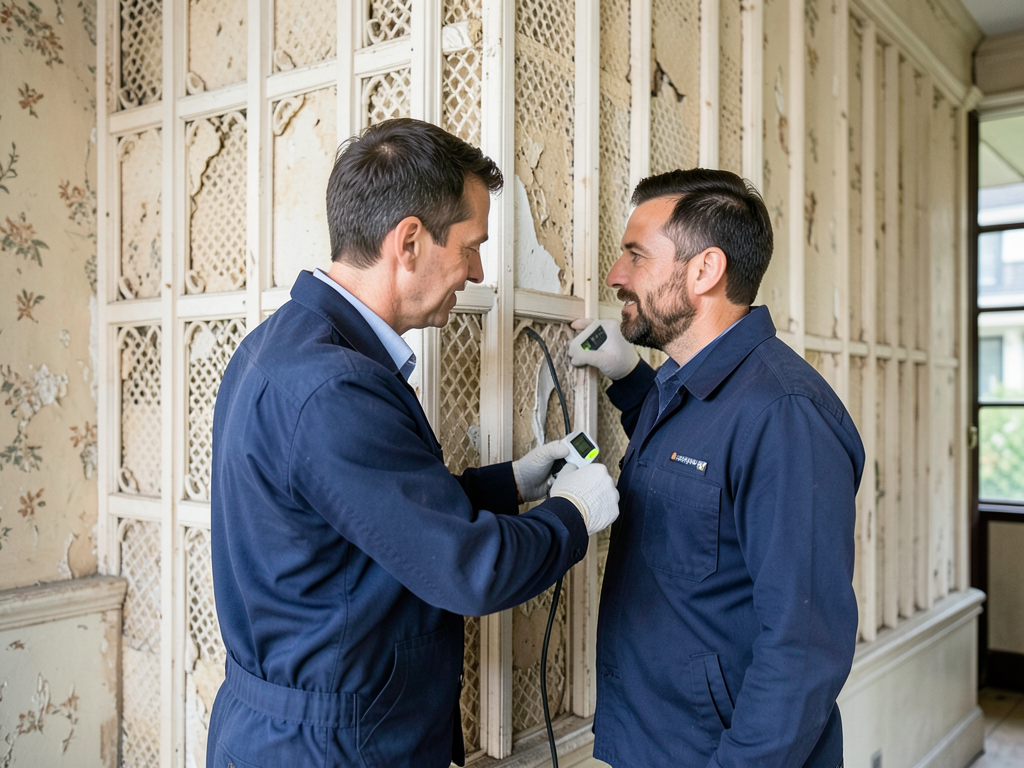
A certified technician uses a moisture meter to detect hidden dampness in a historic Georgetown row house’s lath-and-plaster wall, documenting moisture levels that indicate active mold growth behind the surface.. Read more about Can You Actually Save Your Historic Hardwood Floors After a Leak in Kalorama?.
Every successful remediation starts with accurate diagnosis. In Georgetown’s historic properties, this means using specialized equipment that can detect moisture in materials standard tools miss. Our infrared cameras reveal temperature variations that indicate water behind plaster walls, while our moisture meters measure conductivity through brick and mortar joints that modern sensors can’t penetrate.
We test for three specific mold types common in DC’s climate: Stachybotrys chartarum (black mold), Aspergillus, and Penicillium. Each requires different containment protocols. Black mold, for instance, produces mycotoxins that can cause respiratory issues, requiring full negative air pressure containment with HEPA-filtered air scrubbers.
Our inspection process follows EPA guidelines for pre-remediation assessment. We document the extent of visible mold, identify moisture sources using hygrometers that measure relative humidity in crawl spaces and basements, and collect air samples for third-party laboratory analysis. This baseline data proves essential for both remediation planning and insurance documentation.. Read more about How to Handle a Flooded Basement in Woodley Park (And Who to Call Fast).
Our 5-Step Remediation Process
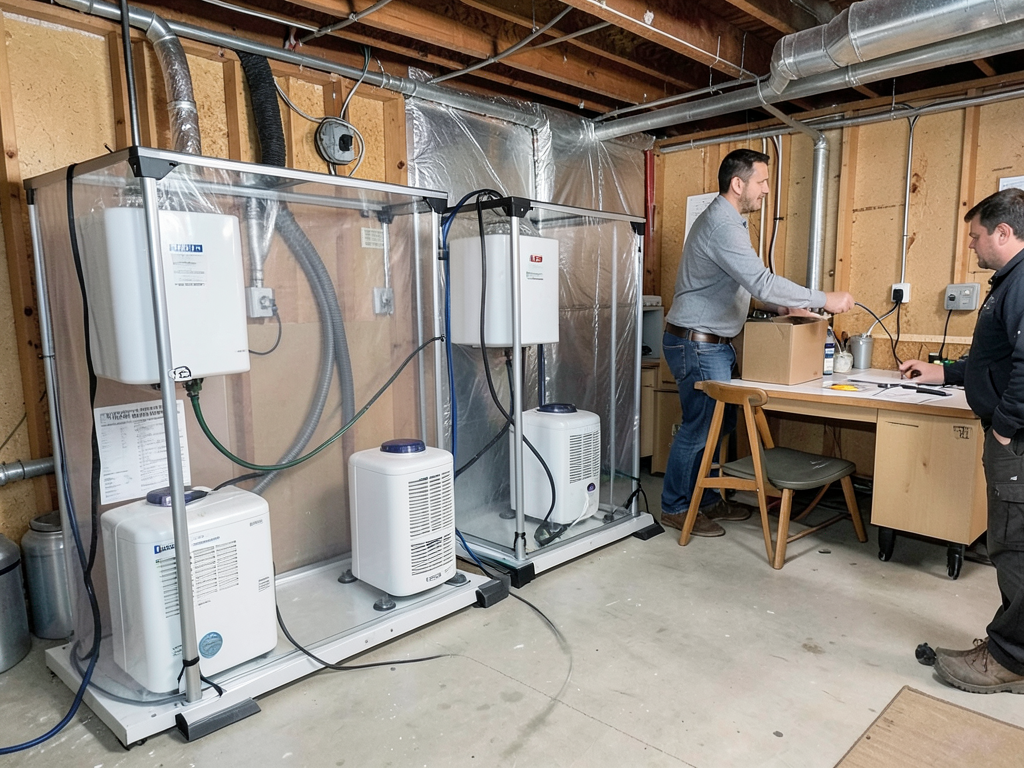
A containment barrier with HEPA filtration units creates negative air pressure during mold remediation in a historic Georgetown basement, preventing spore migration to other parts of the home.. Read more about Basement Dehumidification and Mold Prevention in Mt Pleasant.
Step 1: Assessment and Planning. We begin with a comprehensive evaluation of the affected area, measuring moisture content in historic materials using pinless moisture meters that won’t damage original plaster. This step identifies whether we’re dealing with surface mold or deeper structural issues that require more extensive intervention.
Step 2: Containment Setup. For Georgetown’s open floor plans and shared-wall row houses, we establish containment barriers using 6-mil polyethylene sheeting sealed with painter’s tape to protect adjacent units. We then install HEPA-filtered air scrubbers that create negative pressure, ensuring mold spores can’t escape the work area.
Step 3: HEPA Filtration and Air Cleaning. Our industrial-grade air scrubbers process 500-2,000 cubic feet per minute, continuously filtering the air during remediation. This step removes airborne spores and prevents cross-contamination, critical in Georgetown’s densely packed historic district where properties share walls.. Read more about Cleaning Up After a Frozen Pipe Bursts in Foggy Bottom.
Step 4: Mold Removal and Cleaning. We use EPA-registered antimicrobial agents specifically formulated for historic materials. For lath-and-plaster walls, we apply treatments that penetrate without dissolving the plaster. For brick and stone, we use low-pressure cleaning methods that preserve the patina while eliminating mold at the cellular level.
Step 5: Post-Remediation Verification. We conduct clearance testing using the same protocols as the initial inspection. This includes visual examination, moisture readings to confirm materials have dried to acceptable levels, and air sampling to verify spore counts have returned to normal levels.
Navigating Historic Preservation and Mold Removal
Georgetown’s status as a historic district means every remediation project must comply with Old Georgetown Board guidelines. This adds complexity but also protection for your property’s value. We work directly with the Board when necessary, submitting treatment plans that demonstrate our methods preserve original materials while meeting modern health standards.
The Board’s requirements affect everything from the cleaning agents we can use to the disposal methods for contaminated materials. For instance, we cannot use harsh chemicals that might damage original paint finishes or architectural details. Instead, we rely on botanical-based antimicrobials that are both effective and preservation-approved.
Many Georgetown homes have shared foundations with neighboring properties, creating additional challenges. A mold problem in one basement can quickly spread through interconnected crawl spaces. Our containment protocols account for these shared spaces, using specialized sealing techniques that prevent cross-contamination between units.
DC Water regulations also impact our work. The District’s combined sewer system means that water from remediation activities must be properly contained and disposed of according to municipal guidelines. We maintain documentation for all water disposal, ensuring compliance with both environmental regulations and historic preservation standards.
Why Local DC Residents Trust Us
A before-and-after comparison showing a Georgetown basement’s brick walls before mold remediation (dark, damp appearance) and after treatment (clean, dry, with preserved historic character).
DC residents choose our services because we understand the specific challenges of the region. We’re familiar with the Potomac’s flood patterns, the freeze-thaw cycles that stress historic masonry, and the humidity levels that make mold growth almost inevitable in poorly ventilated spaces.
Our team holds IICRC certification in mold remediation (IICRC S520 standard), and we maintain DC Department of Energy & Environment (DOEE) compliance for all remediation activities. We carry comprehensive liability insurance that covers both the remediation work and any incidental damage to historic materials. IICRC S520 Mold Remediation Standard.
We’ve worked throughout Georgetown’s East Village and West Village, handling everything from minor bathroom mold in 19th-century townhomes to extensive basement remediation in properties near Dumbarton Oaks. Our familiarity with local architecture means we can often identify potential problem areas before they become emergencies.
Insurance companies in the DC area recognize our documentation as meeting their requirements for mold damage claims. We provide detailed reports with moisture mapping, photographic evidence, and laboratory results that support your claim and expedite the approval process.
Contact Our Georgetown Emergency Team
Don’t wait for mold to spread through your historic Georgetown property. The longer you wait, the more extensive and expensive the remediation becomes. Our emergency response team is available 24/7 for Georgetown and surrounding Northwest DC neighborhoods.
We understand that mold emergencies don’t follow business hours. That’s why we maintain a dedicated emergency line with technicians who can be on-site within 90 minutes of your call. When you’re dealing with potential health hazards and property damage, every minute counts.
Call (771) 223-8077 today to schedule your inspection. Our specialists will assess your property’s specific needs and provide a clear plan for safe, effective mold remediation that protects both your health and your home’s historic character. Don’t let mold compromise the beauty and value of your Georgetown property.
Frequently Asked Questions
How quickly can mold spread in a Georgetown home?
Mold can begin growing within 24-48 hours of moisture exposure in Georgetown’s humid climate. The combination of historic materials, poor ventilation in older homes, and proximity to the Potomac creates ideal conditions for rapid mold colonization.
Will mold remediation damage my historic plaster walls?
Professional remediation using IICRC S520 standards and preservation-approved methods will not damage historic plaster. We use specialized techniques and gentle cleaning agents that eliminate mold while preserving original materials and finishes.
Is mold remediation covered by insurance in Georgetown?
Coverage depends on the source of moisture. Sudden pipe bursts are typically covered, while long-term moisture issues may not be. We provide detailed documentation that insurance companies require for mold damage claims in DC.
How long does mold remediation take in a historic property?
Most residential projects take 3-5 days, depending on the extent of contamination and the complexity of historic materials. We work efficiently while ensuring thorough treatment and proper drying of all affected areas.
What makes Georgetown mold remediation different from other areas?
Georgetown’s historic district status, shared-wall construction, and specific climate conditions require specialized knowledge. We understand Old Georgetown Board requirements, local building codes, and the unique challenges of working with century-old materials in a humid, flood-prone environment.