




Menu

Efflorescence on Concrete in Washington, D.C. – Expert Diagnosis and Permanent Moisture Solutions

Stop guessing about white powder on concrete. Our water damage specialists identify the moisture source causing efflorescence, then fix the underlying problem to prevent recurring crystalline deposits on your foundation, basement walls, and floors.

Slider Image 1
Slider Image 2
Slider Image 3
Slider Image 4
Slider Image 5
Slider Image 7
Slider Image 8
Slider Image 9
Slider Image 10
Slider Image 11

Why White Powder Keeps Appearing on Your Washington, D.C. Concrete

You notice white residue on concrete in your basement. You scrub it away, and it returns within weeks. That chalky white powder on concrete is efflorescence, and it signals an active moisture problem beneath your property.

Washington, D.C. sits in a humid subtropical zone with annual precipitation exceeding 40 inches. The district's heavy clay soils retain water, creating hydrostatic pressure against foundation walls. When groundwater saturates concrete, it dissolves mineral salts embedded in the material. As the water evaporates through the surface, those dissolved salts crystallize into the visible white deposits you see.

Efflorescence appears most commonly on basement walls, garage floors, and exterior foundation surfaces in neighborhoods like Capitol Hill, Georgetown, and Dupont Circle. The crystalline deposits on concrete range from fine powder to thick, crusty buildups. You might see it concentrated near floor-wall joints, around window wells, or along mortar lines in block foundations.

The white residue itself does not damage concrete. The problem is what it reveals. Persistent efflorescence means water is moving through your concrete. That moisture brings dissolved salts to the surface, but it also creates conditions for mold growth, wood rot in rim joists, and progressive concrete deterioration through freeze-thaw cycling during Washington's winter months.

Ignoring concrete salt deposits leads to bigger issues. The moisture causing efflorescence can compromise structural integrity, damage stored belongings, and create health risks from elevated indoor humidity. You need to address the water source, not just clean the surface.

Why White Powder Keeps Appearing on Your Washington, D.C. Concrete
How We Eliminate Efflorescence by Controlling the Moisture Source

How We Eliminate Efflorescence by Controlling the Moisture Source

Surface cleaning removes visible mineral salts on concrete temporarily. It does nothing to stop the water intrusion causing the problem. Reliance Water Damage Restoration Washington DC addresses efflorescence by identifying and controlling the moisture source.

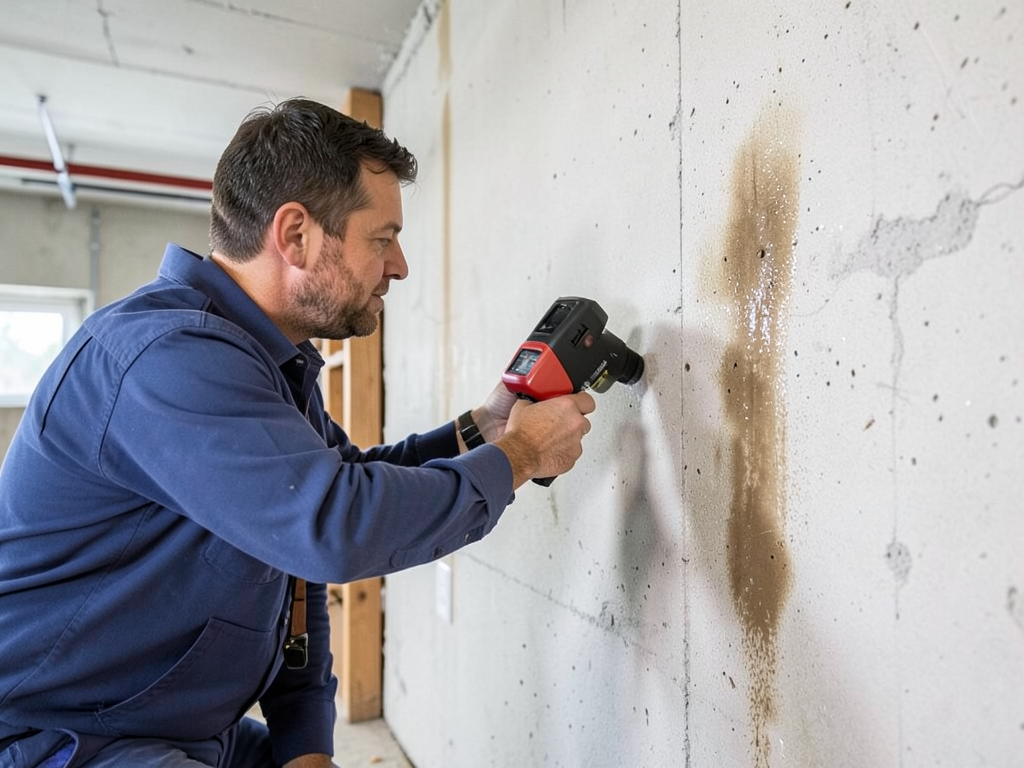
We start with diagnostic moisture mapping using calibrated infrared cameras and pin-type moisture meters. These tools reveal moisture gradients within concrete and adjacent materials. We measure moisture content at multiple depths to determine whether water is wicking up from beneath the slab, penetrating laterally through walls, or condensing from humid interior air.

Next, we trace the water pathway. In Washington, D.C. properties, common sources include failed exterior drainage systems, damaged downspout connections, improper grading that slopes toward foundations, and hydrostatic pressure from high water tables near Rock Creek or the Potomac River. We inspect exterior grade elevations, test sump pump functionality, and evaluate foundation drainage tile condition.

Once we identify the moisture pathway, we implement targeted corrections. This may include installing or repairing interior drainage systems, applying crystalline waterproofing compounds that seal capillary pathways in concrete, or recommending exterior excavation to install proper foundation waterproofing membranes.

For active water intrusion, we use commercial dehumidification equipment to reduce ambient humidity below the dew point threshold. This prevents additional moisture from condensing on cool concrete surfaces. We monitor drying progress with daily moisture readings until concrete reaches equilibrium moisture content below 12 percent.

We do not apply sealers or coatings over active efflorescence. Trapping moisture behind impermeable barriers accelerates concrete spalling and creates pressure that can delaminate surface treatments. We dry first, then seal when appropriate.

What Happens During Efflorescence Assessment and Remediation

Efflorescence on Concrete in Washington, D.C. – Expert Diagnosis and Permanent Moisture Solutions
01

Moisture Source Identification

We use thermal imaging and moisture meters to map water movement through your concrete. This reveals whether moisture is rising through the slab, penetrating walls laterally, or condensing from humid air. We inspect exterior drainage, grade slopes, and interior humidity levels. You receive documentation showing moisture readings and water pathways causing the crystalline deposits on your foundation.
02

Water Intrusion Correction

We implement solutions matched to your specific moisture source. This might include installing perimeter drainage systems, repairing failed sump pumps, applying penetrating sealers that block capillary water movement, or correcting exterior grading issues. For severe hydrostatic pressure, we recommend waterproofing membranes or exterior drain tile installation. Each solution targets the root cause, not just the visible white powder.
03

Controlled Drying and Prevention

We deploy commercial dehumidifiers to reduce concrete moisture content below levels that support efflorescence formation. Daily moisture readings track drying progress until concrete reaches stable equilibrium. Once dry, we can apply appropriate sealers or coatings if needed. You receive a final moisture report and maintenance recommendations to prevent recurrence. The white residue stops forming because the water source is controlled.

Why Washington, D.C. Property Owners Trust Our Efflorescence Expertise

Efflorescence requires understanding both concrete behavior and local hydrology. Washington, D.C. presents unique challenges that generic waterproofing contractors often misdiagnose.

The district's geology includes thick deposits of marine clay from ancient Potomac River terraces. These clay soils have low permeability, meaning water does not drain quickly through the ground. Instead, it saturates the soil near foundations, creating persistent hydrostatic pressure against basement walls. Properties in low-lying areas near the Anacostia River or Potomac Park face elevated water tables that fluctuate seasonally.

We understand how Washington's building codes affect foundation construction. Older homes in historic districts like Shaw and Logan Circle often have unreinforced brick or stone foundations that are porous and lack modern waterproofing. Newer construction in areas like Navy Yard may have proper drainage tile, but installation errors during development can leave systems non-functional.

Our technicians hold IICRC certifications in water damage restoration and applied structural drying. We do not guess about moisture sources. We use quantified data from calibrated instruments to diagnose problems accurately. This matters because misdiagnosis leads to wasted money on ineffective treatments.

Reliance Water Damage Restoration Washington DC has resolved efflorescence issues in rowhouses, historic buildings, and modern residential properties throughout the district. We work with structural engineers when foundation integrity is questionable. We coordinate with landscaping contractors when exterior grading corrections are needed. You get comprehensive solutions, not surface-level fixes.

We also understand insurance considerations. Some moisture intrusion falls under covered perils, while chronic seepage due to maintenance neglect does not. We provide detailed documentation to help you navigate claims processes with accurate moisture assessments and photographic evidence.

What to Expect When You Call About Efflorescence Problems

Response Time and Availability

We schedule efflorescence assessments within 24 to 48 hours of your call. Active water intrusion receives same-day emergency response. Our diagnostic appointments typically last 60 to 90 minutes, depending on property size and complexity. You receive preliminary findings immediately, with a detailed written report within 24 hours. We operate seven days a week because moisture problems do not wait for business hours. If you call about white powder on concrete during a weekend, we evaluate your property that weekend.

Diagnostic Assessment Process

Our assessment includes thermal imaging of all affected surfaces, moisture content readings at multiple wall depths, and visual inspection of interior and exterior drainage components. We test sump pumps, evaluate floor drain functionality, and measure relative humidity levels. You receive documentation showing moisture readings, thermal images highlighting water intrusion points, and photographs of contributing factors like improper grading or damaged gutters. This data forms the basis for our remediation proposal. We explain findings in clear language, without jargon, so you understand exactly what is causing the efflorescence.

Remediation Results and Outcomes

When we eliminate the moisture source, efflorescence stops forming. Existing deposits can be cleaned mechanically or dissolved with mild acidic solutions once concrete is dry. You will not see new white powder appearing after we correct water intrusion. Concrete moisture content drops to stable levels below 12 percent. Humidity in affected spaces normalizes to comfortable ranges between 30 and 50 percent relative humidity. The musty smell associated with damp concrete disappears. Your basement becomes usable space again, not a repository for moisture problems.

Ongoing Monitoring and Maintenance

After remediation, we provide specific maintenance guidelines for your property. This includes recommended frequency for sump pump testing, gutter cleaning schedules, and signs of drainage system problems to watch for. We offer annual moisture inspections to verify that corrections remain effective, especially for properties in flood-prone areas near the Potomac River or with chronic drainage challenges. If efflorescence reappears, we return to reassess at no charge if it occurs within the first year after our work. You receive our direct contact information for future questions or concerns about moisture in your concrete.

Frequently Asked Questions

You Have Questions,
We Have Answers

How do you fix efflorescence in concrete? +

Start by dry brushing the white salt deposits with a stiff bristle brush. For stubborn efflorescence, use a diluted muriatic acid solution or a commercial efflorescence cleaner. Apply the cleaner, scrub gently, and rinse thoroughly with water. The key is finding and fixing the moisture source. In Washington, D.C., check for foundation cracks, poor grading around your home, or leaking gutters. High humidity along the Potomac River basin makes basement moisture common. If efflorescence keeps returning after cleaning, you have an active water intrusion problem that needs professional diagnosis.

Should I remove concrete efflorescence? +

Yes, you should remove efflorescence, but understand it is a symptom, not the disease. The white crystalline deposits are harmless salts, but they signal ongoing moisture movement through your concrete. In Washington, D.C., where seasonal freeze-thaw cycles and humid summers stress foundations, ignoring efflorescence can lead to spalling, cracking, and structural damage. Remove the visible deposits with brushing or chemical cleaners, then address the water source. If you see efflorescence in your basement or crawl space, check your sump pump, drainage systems, and exterior grading.

Is efflorescence a serious problem? +

Efflorescence itself is not structurally dangerous. The salts are cosmetically unappealing but inert. The problem is what efflorescence reveals. Persistent moisture migration through concrete causes freeze-thaw damage, reinforcement corrosion, and mold growth. Washington, D.C. homes, especially older row houses and properties near Rock Creek or the Anacostia River, face constant hydrostatic pressure and groundwater intrusion. If you see recurring efflorescence, you have a water management problem. Left unchecked, that moisture will degrade concrete, rot framing, and create conditions for microbial growth. Address the water source immediately.

Can you seal concrete over efflorescence? +

No, never seal over efflorescence. Sealing traps salts and moisture beneath the surface, which accelerates concrete degradation. The trapped moisture will cause the sealer to delaminate, bubble, or peel. You must remove all visible efflorescence and eliminate the moisture source before applying any sealer. In Washington, D.C., where high water tables and clay soils create constant foundation moisture challenges, premature sealing is a common mistake. Wait until the concrete is completely dry, typically 28 days after the last moisture event. Test for moisture with a plastic sheet taped down overnight.

Does efflorescence indicate water damage? +

Yes, efflorescence is a direct indicator of water moving through your concrete. Water dissolves salts within the concrete or soil, carries them to the surface, and evaporates, leaving the white crystalline deposits. In Washington, D.C., this often signals foundation leaks, poor exterior drainage, or rising damp from the water table. Homes in low-lying areas near the National Mall or along the Potomac experience higher groundwater pressure. If you see efflorescence on basement walls, garage floors, or exterior foundation walls, you have active moisture intrusion that requires immediate attention.

What is the best efflorescence remover? +

The best remover depends on severity. For light deposits, distilled white vinegar or a mild detergent works. For moderate to heavy efflorescence, use a diluted muriatic acid solution or phosphoric acid-based cleaners like Sure Klean or RadonSeal Efflorescence Cleaner. Always test in a small area first. Washington, D.C. row houses with historic brick and concrete often require gentler treatments to avoid damaging masonry. Avoid pressure washing, which drives water deeper into the substrate. After cleaning, neutralize acid treatments with a baking soda rinse, then address the underlying moisture problem.

Does vinegar stop efflorescence? +

Vinegar can remove light efflorescence but does not stop it. The acetic acid in vinegar dissolves calcium carbonate salts, making it useful for cosmetic cleaning. However, vinegar does nothing to address the moisture source causing the efflorescence. In Washington, D.C., where basement humidity and groundwater intrusion are common, vinegar is a temporary fix. You must identify and repair the water entry point, improve drainage, or install a vapor barrier. If efflorescence returns after vinegar cleaning, you need professional waterproofing. Vinegar treats the symptom, not the cause.

What is the 20/30/40 rule in concrete? +

The 20/30/40 rule is outdated jargon related to concrete mix design ratios, not efflorescence. It references old mix proportions measured by volume. Modern concrete uses performance-based specifications measured by weight and water-cement ratio. If you are dealing with efflorescence in Washington, D.C., focus on moisture control, not mix ratios. The rule has no relevance to diagnosing or fixing efflorescence. What matters is proper drainage, waterproofing, and vapor barriers. If a contractor mentions this rule in the context of water damage repair, they are likely inexperienced.

Will efflorescence eventually stop? +

Efflorescence will stop only when the moisture source is eliminated. If water stops moving through the concrete, no new salts migrate to the surface. However, in Washington, D.C., seasonal groundwater fluctuations, clay soil expansion, and high humidity make permanent moisture control challenging. Efflorescence often recurs after rain events or during spring thaw. Temporary cessation during dry summer months does not mean the problem is solved. You must address foundation drainage, repair cracks, install sump pumps, or apply waterproofing membranes. Without intervention, efflorescence will return with the next wet cycle.

How much does it cost to fix efflorescence? +

Costs vary widely based on severity and root cause. Surface cleaning runs $200 to $500 for a small basement. If you need foundation crack repair, expect $1,500 to $5,000. Full exterior waterproofing with excavation, drainage, and membranes costs $8,000 to $20,000 depending on the home. Washington, D.C. row houses with shared walls and limited access face higher labor costs. Interior drainage systems with sump pumps range from $3,000 to $7,000. Do not pay for efflorescence removal alone. Invest in fixing the moisture source. Cosmetic cleaning without water control is wasted money.

How Washington, D.C.'s Clay Soils and Seasonal Rainfall Patterns Drive Efflorescence Formation

Washington, D.C. receives significant precipitation from spring thunderstorms and occasional tropical systems moving up the Atlantic coast. The district's heavy clay soils do not absorb water quickly, leading to surface runoff and soil saturation near foundations. During wet seasons from March through June, the water table rises in low-lying neighborhoods near the Anacostia and Potomac Rivers. This creates hydrostatic pressure that forces groundwater through concrete pores, carrying dissolved mineral salts that emerge as white powder when the water evaporates. Properties built on filled land or near stream valleys experience the highest efflorescence rates because water accumulates in these topographic low points.

Older Washington, D.C. properties often lack the foundation waterproofing and drainage systems required by modern building codes. Historic rowhouses in Capitol Hill and Georgetown frequently have stone or brick foundations laid without damp-proofing membranes. These porous materials allow water to wick upward from saturated soil through capillary action, depositing mineral salts as moisture evaporates from interior surfaces. Our team understands how to work within historic preservation guidelines while implementing effective moisture control. We coordinate with the Historic Preservation Office when needed to ensure remediation methods meet district requirements for contributing structures in designated historic districts.
Water Damage Restoration Services in The Washington DC Area

While we primarily offer mobile, on-site water damage restoration services throughout Washington D.C., you can view our main operational hub and service area on the map below. We are strategically located to ensure rapid deployment and efficient response times to all emergencies across the region, bringing our expert services directly to your property wherever you are within our service footprint.

Address:
Reliance Water Damage Restoration Washington DC, 200 Massachusetts Ave NW, Washington, DC, 20001

Additional Services We Offer

Our news updates

Latest Articles & News from The Blogs

Why Your New Condo at The Wharf Might Experience Balcony Drainage Flooding Living in a luxury condo at The Wharf…

Why Your New Condo at The Wharf Might Experience Balcony Drainage Flooding

Why Your New Condo at The Wharf Might Experience Balcony Drainage Flooding Living in a luxury condo at The Wharf…

Dealing with Potomac River Seepage in Your Georgetown Waterfront Retail Space

Dealing with Potomac River Seepage in Your Georgetown Waterfront Retail Space Georgetown's waterfront retail spaces face unique water damage risks…

What Every DC Homeowner Needs in a Flood Emergency Kit Before the Next Storm Hits

What Every DC Homeowner Needs in a Flood Emergency Kit Before the Next Storm Hits Washington DC homeowners face unique…

Contact Us

White powder on your concrete signals an active moisture problem that will not fix itself. Call Reliance Water Damage Restoration Washington DC at (771) 223-8077 for expert diagnosis and lasting solutions. We identify the water source and eliminate it permanently.