




Menu

Emergency Mold Containment in Washington, D.C. – 24/7 Response Teams Dispatch Within 60 Minutes

When black mold threatens your property, our certified containment specialists arrive fast with industrial-grade negative air machines and antimicrobial barriers. Emergency mold containment stops spore migration before it spreads through your HVAC system.

Slider Image 1
Slider Image 2
Slider Image 3
Slider Image 4
Slider Image 5
Slider Image 7
Slider Image 8
Slider Image 9
Slider Image 10
Slider Image 11

Why Mold Spreads So Fast in Washington, D.C. Properties

You found visible mold growth and need it isolated right now. That instinct is correct.

Washington, D.C.'s high humidity and frequent Potomac River valley fog create perfect conditions for explosive mold colonization. A single water intrusion event in Georgetown's brick rowhouses or Capitol Hill's older homes can produce airborne spore counts exceeding 50,000 CFU per cubic meter within 48 hours. The District's aging infrastructure, combined with summer dewpoints regularly hitting 70 degrees, turns basements and crawlspaces into incubation zones.

Urgent mold isolation is not about cleaning visible patches. It is about stopping invisible spore migration through your ventilation system before contamination reaches bedrooms, kitchens, and common areas. Immediate mold mitigation requires negative air pressure chambers, HEPA filtration barriers, and complete HVAC shutdown to prevent cross-contamination.

Most property owners discover mold after noticing musty odors near air returns or dark staining around window frames. By that point, hidden colonies have already established behind drywall or under flooring. Emergency mold abatement starts with containment because disturbing active growth without proper barriers releases millions of spores into breathable air.

The health risks escalate fast. Stachybotrys chartarum, the black mold common in D.C.'s moisture-prone properties, produces mycotoxins that trigger respiratory distress and neurological symptoms. Children and immunocompromised residents face the highest risk. Rapid mold containment services create physical barriers using 6-mil polyethylene sheeting and negative air scrubbers that cycle contaminated air through three-stage HEPA filters before exhaust.

You cannot wait for a convenient appointment. 24/7 mold damage containment means our teams mobilize immediately with truck-mounted equipment designed for aggressive spore suppression.

Why Mold Spreads So Fast in Washington, D.C. Properties
How Professional Containment Stops Cross-Contamination

How Professional Containment Stops Cross-Contamination

Emergency mold containment is a calculated engineering process, not a cleanup service.

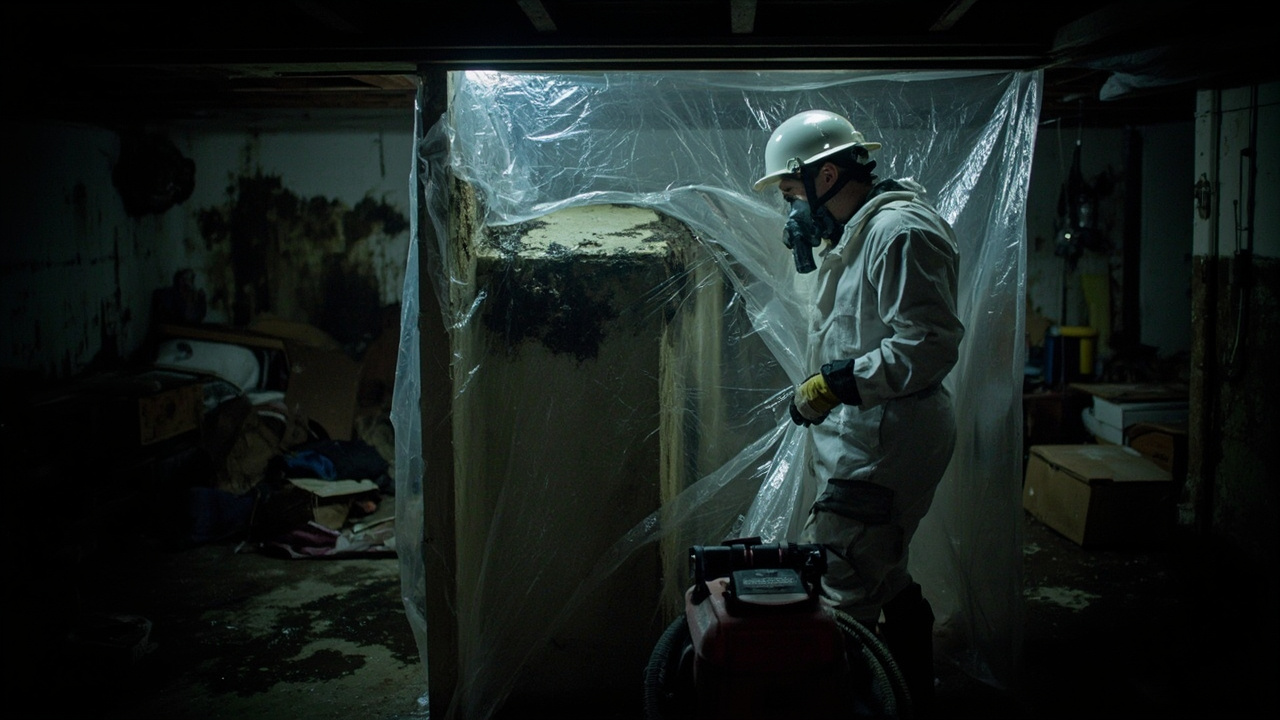
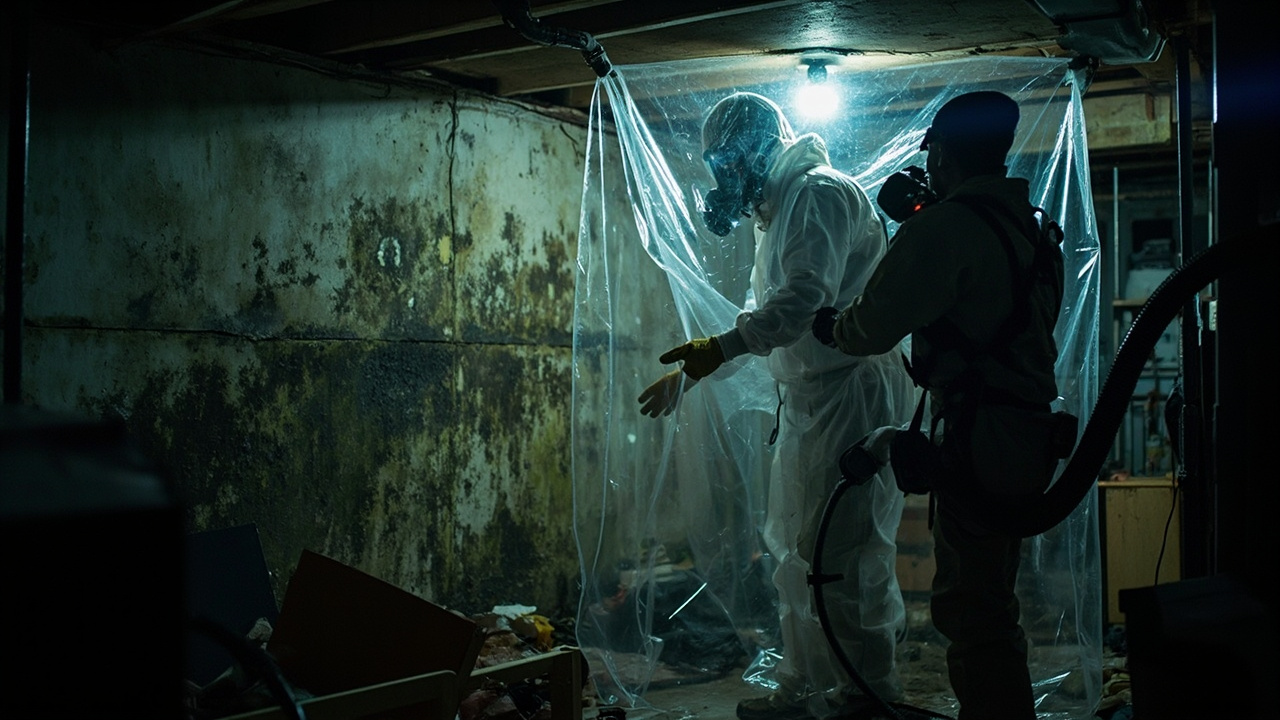
Our technicians establish negative pressure zones using commercial air scrubbers rated for 2,000 CFM airflow. We seal the contaminated area with fire-rated polyethylene barriers, creating an isolated chamber where air pressure remains 5-10 Pascals lower than surrounding spaces. This pressure differential ensures airborne spores cannot escape the containment zone, even when technicians enter through zipper doors.

Critical path sealing comes first. We identify every air return duct, doorway undercut, and penetration point where spores could migrate. HVAC systems get shut down completely. Supply and return vents receive taped coverings. We install HEPA-rated air scrubbers with activated carbon filters to capture both particulates and volatile organic compounds released during mold metabolism.

The containment barrier extends beyond visible growth. Mold colonization spreads through capillary action in porous materials like drywall paper and wood framing. Our containment perimeter includes a two-foot buffer zone around all affected areas. We use moisture meters to map hidden saturation and thermal imaging cameras to identify temperature differentials that indicate active microbial activity behind finished surfaces.

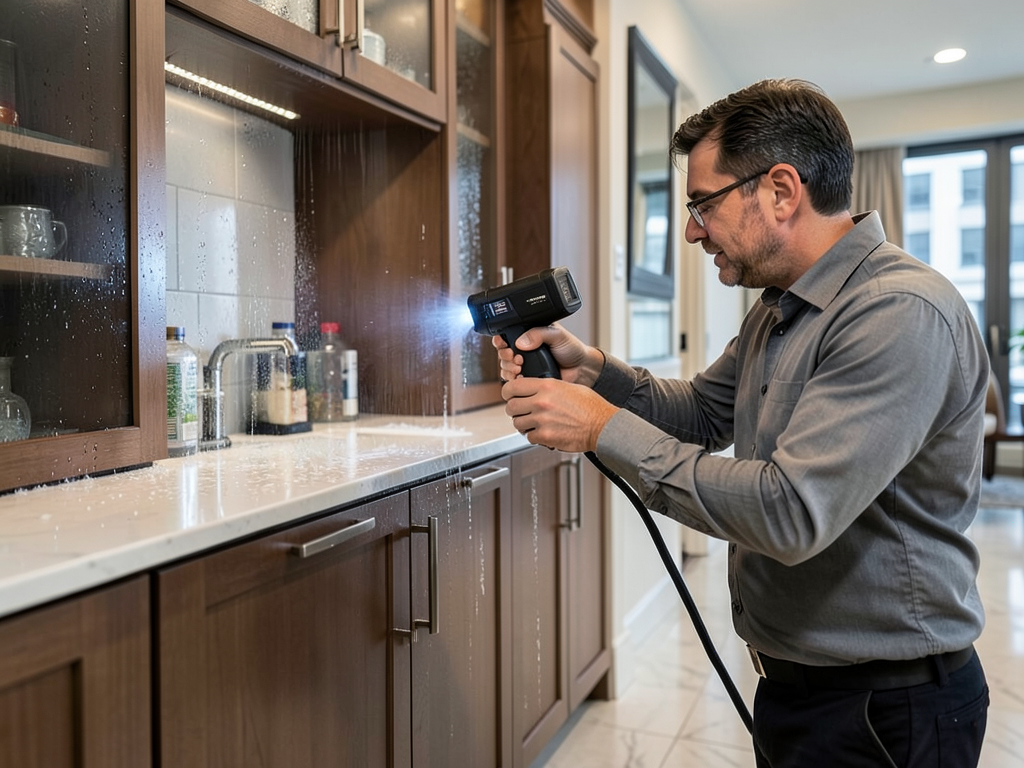
Reliance Water Damage Restoration Washington DC deploys antimicrobial fogging inside sealed containment zones to knock down airborne spore concentrations before physical removal begins. This pre-treatment step reduces surface spore counts by 95 percent, protecting our technicians and preventing re-aerosolization during demolition.

We maintain containment integrity throughout the entire remediation cycle. Air quality testing confirms spore counts drop below 500 CFU per cubic meter before barriers come down. The goal is complete isolation until the threat is eliminated, not just surface cleaning that leaves hidden reservoirs active.

What Happens During Emergency Containment Deployment

Emergency Mold Containment in Washington, D.C. – 24/7 Response Teams Dispatch Within 60 Minutes
01

Immediate Site Assessment

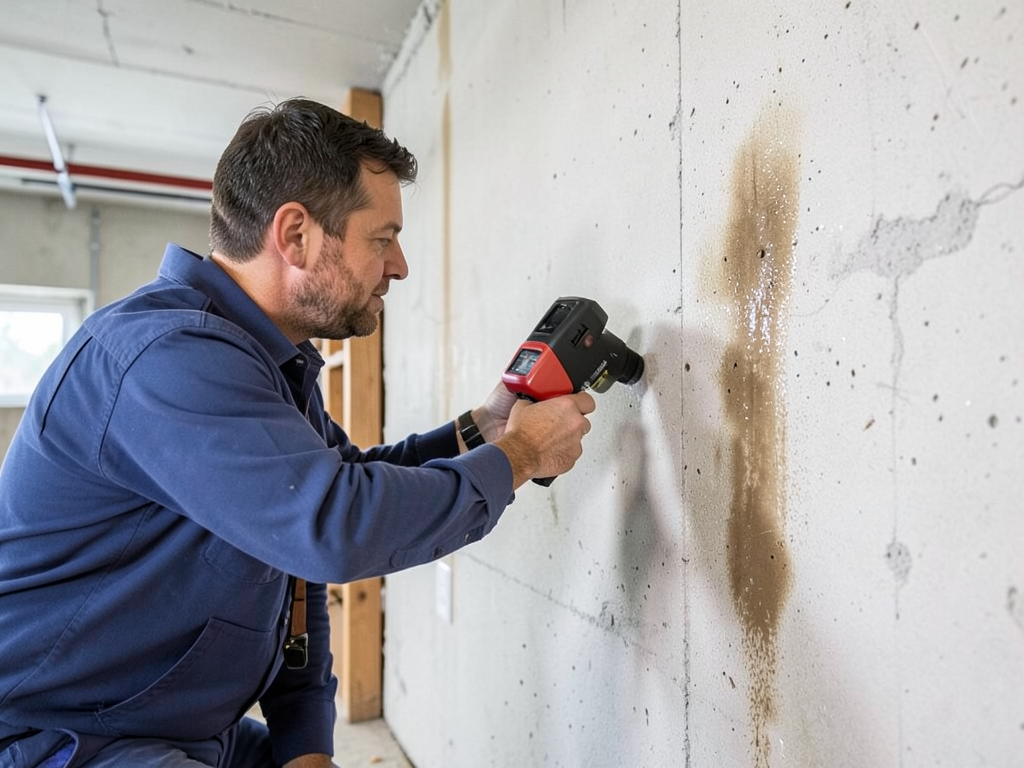
Our lead technician arrives with moisture detection equipment and performs a rapid contamination survey. We identify the water source, map visible growth patterns, and determine containment boundaries using EPA S520 protocols. This 15-minute assessment establishes whether you need single-room isolation or multi-zone containment. We photograph all affected areas and document pre-mitigation conditions for insurance claims before any equipment deployment begins.
02

Barrier Construction and Pressurization

Technicians build full-height polyethylene walls using metal framing and contractor-grade tape systems. We install commercial negative air machines with ducting that exhausts outside your building envelope. The containment zone reaches negative pressure within 10 minutes of scrubber activation. We verify pressure differentials using manometers and confirm HEPA filter integrity before any disturbance of contaminated materials. All entry points receive double-door airlocks to prevent pressure loss during personnel movement.
03

Controlled Spore Suppression

With containment sealed and verified, we apply EPA-registered antimicrobial agents through electrostatic foggers to neutralize airborne spores. Air scrubbers run continuously, cycling the entire containment volume every 4-6 minutes through HEPA filtration. We monitor particle counts using real-time air sampling equipment and adjust scrubber placement to eliminate dead zones. The containment remains active until post-remediation clearance testing confirms spore levels match outdoor ambient counts.

Why D.C. Properties Require Specialized Containment Protocols

Washington, D.C.'s building stock presents unique containment challenges that generic mold companies cannot address.

Historic properties in Dupont Circle and Logan Circle feature horsehair plaster walls and balloon framing that creates open vertical chases from basement to attic. Spores travel through these hidden pathways faster than through modern platform-framed construction. Our containment strategies account for these architectural realities. We seal wall cavities at floor penetrations and use thermal imaging to trace airflow patterns through old construction before establishing barriers.

The District's strict preservation regulations in designated historic districts require containment methods that protect original materials. We cannot simply tear out contaminated plaster without Historic Preservation Review Board approval. Our containment approach isolates active growth while preserving salvageable historic fabric, using HEPA vacuuming and antimicrobial treatments instead of automatic demolition.

Federal buildings and properties near government complexes require security-conscious contractors familiar with clearance protocols and after-hours access procedures. Reliance Water Damage Restoration Washington DC maintains relationships with property management firms serving these specialized facilities. We understand chain-of-custody documentation and restricted-area protocols that typical restoration contractors cannot navigate.

Commercial properties in the central business district face business continuity pressures. A law firm in the Metro Center cannot shut down for three days while mold spreads. Our containment methodology allows occupied spaces to remain functional while we isolate and treat contaminated zones. We work overnight shifts and schedule noisy equipment operations during off-hours to minimize disruption.

Local expertise matters when dealing with D.C. Water's unique plumbing infrastructure and the clay soil conditions that cause chronic foundation seepage in neighborhoods east of Rock Creek Park. We have contained mold in every building type the District offers, from Anacostia garden apartments to Embassy Row mansions.

What to Expect When You Call for Emergency Containment

Response Time and Availability

Our dispatch center operates 24 hours with no answering service delays. You speak directly to a containment coordinator who assesses urgency and dispatches the nearest response team. Trucks carry pre-staged containment equipment including scrubbers, barrier materials, and antimicrobial agents. Most properties in the District receive technician arrival within 60-90 minutes of your call. We do not schedule appointments for next-day service when active mold growth threatens your property. Emergency containment begins the moment our team walks through your door, not after a consultation period.

Initial Contamination Mapping

Our assessment identifies contamination extent using moisture meters, thermal cameras, and visual inspection protocols defined in IICRC S520 standards. We distinguish between active growth requiring immediate containment and dormant surface staining that poses lower risk. The evaluation includes HVAC system inspection because air handlers often harbor hidden colonies that seed new growth throughout your property. You receive a verbal briefing on containment scope before equipment deployment. We explain which areas require isolation, estimated containment duration, and whether occupants need temporary relocation. This assessment takes 20-30 minutes and provides the information you need to make informed decisions.

Containment Integrity and Air Quality

Professional containment creates measurable protection verified through particle counting and pressure monitoring. Our barriers remain intact throughout the remediation cycle with technicians checking pressure differentials every four hours. We use sticky mats at containment exits to capture particulates on shoe bottoms and require personnel to wear Tyvek suits that get disposed of inside the containment zone. Air quality improvements happen fast. Most contained spaces show 90 percent spore reduction within six hours of scrubber activation. We provide real-time air sample data showing particle counts dropping from dangerous levels to background concentrations as filtration progresses.

Post-Containment Verification

Containment barriers stay in place until independent third-party testing confirms clearance. We coordinate with certified industrial hygienists who collect air samples and surface samples from remediated areas. Results typically return within 24-48 hours. Clearance requires spore counts below 500 CFU per cubic meter and no detection of marker species like Stachybotrys or Chaetomium. Only after receiving passing results do we remove barriers and release the space for reconstruction. We provide you with complete lab reports and photographic documentation showing before and after conditions. This verification protects you from contractors who declare spaces clean based on visual inspection alone.

Frequently Asked Questions

You Have Questions,
We Have Answers

What is the proper containment for mold? +

Proper mold containment involves isolating the affected area to prevent spore spread during remediation. In Washington, D.C., where older row houses and basements often face humidity issues, professionals use 6-mil polyethylene sheeting to seal off doorways, vents, and openings. Negative air pressure machines with HEPA filters exhaust contaminated air outside, keeping spores from migrating into clean areas. For extensive growth, double containment barriers create airlocks. All HVAC systems must be shut down to prevent cross-contamination through ductwork. Containment protects your family and neighbors in attached homes, which is critical in D.C.'s densely packed neighborhoods.

What plant removes 78% of airborne mold? +

The English ivy plant reportedly removes up to 78% of airborne mold in controlled studies. This plant absorbs mold spores through its leaves, making it a natural air purifier for homes in Washington, D.C., where Potomac River humidity feeds mold growth year-round. But understand this: houseplants are not remediation. If you see visible mold or smell mustiness in your Capitol Hill basement or Georgetown row house, you need professional containment and removal. Plants help with minor spore counts after remediation is complete. They do not replace emergency mold containment when water damage strikes your property.

Does FEMA pay for mold remediation? +

FEMA does not typically cover mold remediation directly. However, if your Washington, D.C. property suffers federally declared disaster damage, such as flooding from Potomac River overflow or severe storms, FEMA may reimburse water extraction and structural drying that prevents mold growth. You must document everything and act fast. Mold developing after delayed cleanup is considered preventable and not covered. Your homeowners insurance may cover mold if it results from a sudden, accidental water event like burst pipes. Read your policy carefully. For immediate containment help, contact a local restoration company to protect your claim.

Is mold an OSHA violation? +

Yes, mold can trigger OSHA violations in commercial properties and workplaces across Washington, D.C. OSHA does not have a specific mold standard, but employers must provide a safe workplace under the General Duty Clause. If employees experience respiratory issues or allergic reactions due to mold exposure in your office building near K Street or warehouse in Navy Yard, OSHA can cite you. Workers performing remediation must follow respiratory protection standards and hazard communication rules. Business owners facing visible growth must act immediately. Document containment efforts and air quality testing to protect employees and avoid liability.

What are the first signs of mold sickness? +

The first signs of mold sickness include persistent coughing, sneezing, watery eyes, throat irritation, and headaches that worsen indoors. In Washington, D.C., where humidity stays high and older buildings trap moisture, residents often mistake mold symptoms for seasonal allergies. You may notice fatigue, sinus congestion, or skin rashes that do not resolve. Asthma sufferers experience increased attacks. If multiple family members feel sick only at home, or symptoms improve when you leave your property, suspect mold exposure. Do not wait. Emergency containment prevents spores from spreading while you identify and eliminate the source.

How to create a mold barrier? +

Creating a mold barrier starts with isolating the contaminated area before remediation begins. Seal off the space using heavy-duty plastic sheeting, taping all seams to walls, floors, and ceilings. In Washington, D.C. row houses, this often means sealing doorways and covering floor vents. Install a negative air machine with HEPA filtration to exhaust spores outside, creating lower air pressure inside the containment zone. This prevents spores from escaping into clean areas. Turn off HVAC systems to stop airflow through ducts. For large-scale growth, professionals create double barriers with airlocks to safely move equipment without contaminating your home.

What pulls mold out of the air? +

HEPA air scrubbers and negative air machines pull mold spores from the air during emergency containment. These devices filter particles down to 0.3 microns, capturing mold spores before they settle on surfaces or spread through your Washington, D.C. property. Professionals position these machines inside containment barriers to continuously clean and exhaust contaminated air outside. Standard home air purifiers with HEPA filters help after remediation is complete, but they lack the power needed during active mold removal. If you smell mustiness or see visible growth in your basement or crawl space, you need industrial-grade equipment and professional containment immediately.

Is it true that English ivy absorbs mold? +

Yes, English ivy has been shown to absorb airborne mold spores in laboratory settings. The plant's leaves capture spores, reducing airborne concentrations in small, enclosed spaces. For Washington, D.C. residents dealing with Potomac humidity, a few ivy plants may help maintain air quality after professional remediation. But this is not a solution for active mold growth. If you see black spots on walls, smell mustiness, or experienced recent water damage in your Dupont Circle condo or Shaw row house, you need emergency containment and removal. Plants support prevention. They do not replace professional mold remediation.

What actually kills mold spores? +

EPA-registered antimicrobial solutions and physical removal kill mold spores during professional remediation. Bleach only works on non-porous surfaces and does not penetrate materials like drywall or wood framing common in Washington, D.C. homes. Professionals use HEPA vacuums to capture spores, then apply biocides to affected surfaces. Porous materials like insulation and drywall often require removal and disposal. Heat treatment above 140 degrees also kills spores but is impractical for most residential applications. The key is containment first, then removal, then treatment. DIY methods spread spores and make problems worse. Call a restoration specialist immediately.

What to do if I can't afford mold removal? +

If you cannot afford mold removal in Washington, D.C., contact your homeowners or renters insurance first. Many policies cover mold if it results from sudden water damage like burst pipes. Document everything with photos. For low-income residents, D.C. Housing Authority offers emergency repair assistance for eligible properties. Some restoration companies provide payment plans or work with insurance adjusters to maximize coverage. Do not ignore mold. It worsens daily and threatens your health. At minimum, isolate the affected area with plastic sheeting, run a dehumidifier, and fix the moisture source. Seek professional assessment before health issues escalate.

How Potomac River Humidity Accelerates Mold Growth in D.C. Properties

Washington sits at the confluence of the Potomac and Anacostia Rivers, creating a humid microclimate that sustains year-round mold activity. Summer relative humidity regularly exceeds 70 percent, well above the 60 percent threshold where mold spores germinate on organic surfaces. Properties in low-lying areas near the National Mall and along the Anacostia waterfront experience chronic moisture intrusion through foundation walls. The District's older neighborhoods feature solid brick construction without vapor barriers, allowing exterior moisture to wick through masonry into interior spaces. Emergency mold containment becomes critical in these conditions because growth accelerates from initial colonization to full coverage in 72 hours when relative humidity stays elevated.

D.C. building codes require mold remediation contractors to follow Department of Energy and Environment guidelines for containment and disposal. Reliance Water Damage Restoration Washington DC maintains current knowledge of District regulations including proper handling of mold-contaminated materials classified as special waste. Our containment protocols exceed minimum code requirements because we understand the liability property owners face when improper remediation leads to recurring growth. We have worked with property management companies throughout the District's diverse building stock, from Tenleytown high-rises to Navy Yard mixed-use developments. Local expertise means understanding which buildings have chronic plumbing issues and which neighborhoods face foundation problems tied to soil conditions.
Water Damage Restoration Services in The Washington DC Area

While we primarily offer mobile, on-site water damage restoration services throughout Washington D.C., you can view our main operational hub and service area on the map below. We are strategically located to ensure rapid deployment and efficient response times to all emergencies across the region, bringing our expert services directly to your property wherever you are within our service footprint.

Address:
Reliance Water Damage Restoration Washington DC, 200 Massachusetts Ave NW, Washington, DC, 20001

Additional Services We Offer

Our news updates

Latest Articles & News from The Blogs

Why Your New Condo at The Wharf Might Experience Balcony Drainage Flooding Living in a luxury condo at The Wharf…

Why Your New Condo at The Wharf Might Experience Balcony Drainage Flooding

Why Your New Condo at The Wharf Might Experience Balcony Drainage Flooding Living in a luxury condo at The Wharf…

Dealing with Potomac River Seepage in Your Georgetown Waterfront Retail Space

Dealing with Potomac River Seepage in Your Georgetown Waterfront Retail Space Georgetown's waterfront retail spaces face unique water damage risks…

What Every DC Homeowner Needs in a Flood Emergency Kit Before the Next Storm Hits

What Every DC Homeowner Needs in a Flood Emergency Kit Before the Next Storm Hits Washington DC homeowners face unique…

Contact Us

Every hour of delay allows exponential spore multiplication. Our containment teams are standing by with equipment and expertise to isolate the threat right now. Call (771) 223-8077 for immediate dispatch. We answer 24/7 and deploy directly to your property.