



Menu

Industrial Drying Services in Washington, D.C. | Minimize Downtime with Large-Scale Commercial Water Extraction

Reliance Water Damage Restoration Washington DC deploys industrial-grade dehumidification and structural drying systems to return your facility to operational status fast, reducing liability and protecting your bottom line.

Slider Image 1
Slider Image 2
Slider Image 3
Slider Image 4
Slider Image 5
Slider Image 7
Slider Image 8
Slider Image 9
Slider Image 10
Slider Image 11

Why Washington, D.C. Commercial Properties Need Specialized Industrial Drying

Water intrusion in a commercial building is not a residential cleanup scaled up. The stakes are higher. Every hour of downtime costs you revenue, disrupts operations, and exposes you to liability. In Washington, D.C., the challenges multiply. The district's aging infrastructure, particularly in areas like Georgetown and Capitol Hill, means older piping systems fail without warning. Proximity to the Potomac and Anacostia Rivers increases groundwater infiltration risk during heavy rain events. Federal buildings and commercial properties near the National Mall face strict historic preservation codes that complicate drying protocols.

You cannot afford to let water sit. Within 48 hours, structural damage accelerates. Mold colonization begins. Building materials like drywall, insulation, and subflooring absorb moisture and compromise structural integrity. For warehouses, data centers, and office buildings, the cost of prolonged closure far exceeds the cost of immediate industrial structural drying.

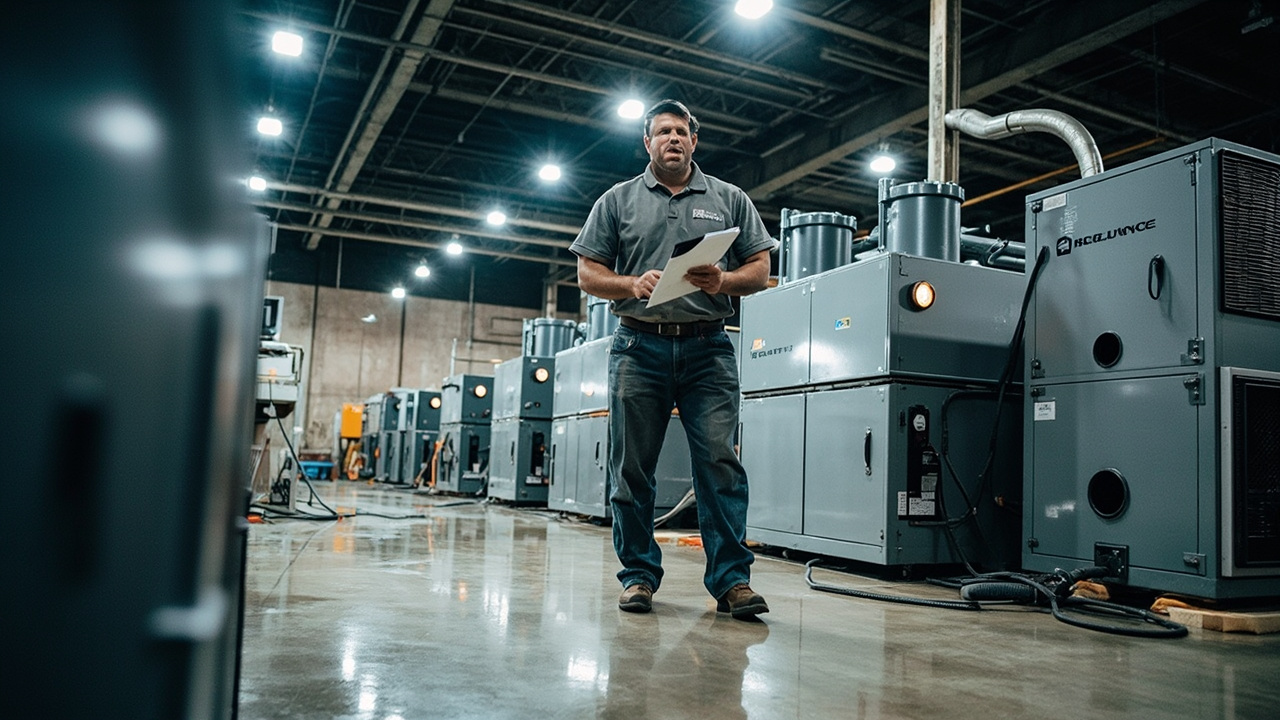
Commercial structural drying requires equipment capacity and technical expertise that residential services cannot provide. You need trailer-mounted dehumidifiers, high-velocity air movers, and thermal imaging to detect hidden moisture in walls and ceilings. You need a team that understands the difference between drying a retail space in 72 hours and managing a multi-floor office building over weeks. Industrial dehumidification services are not optional when your lease, your reputation, and your business continuity depend on speed.

The question is not whether you need commercial drying solutions. The question is whether your provider can mobilize the equipment and personnel to handle 50,000 square feet of water damage on short notice.

Why Washington, D.C. Commercial Properties Need Specialized Industrial Drying
How Industrial Water Drying Works in Large Commercial Spaces

How Industrial Water Drying Works in Large Commercial Spaces

Industrial drying is a calculated process, not a reaction. The first step is moisture mapping. Technicians use penetrating moisture meters and infrared cameras to identify wet zones you cannot see. Water migrates through concrete slabs, climbs walls via capillary action, and saturates HVAC ductwork. You cannot dry what you have not measured.

Once the scope is clear, we deploy commercial water drying services at scale. For a 20,000-square-foot office, that means 40 to 60 air movers positioned to create laminar airflow across wet surfaces. We pair these with low-grain refrigerant dehumidifiers or desiccant units, depending on ambient temperature and humidity levels. Desiccant dehumidifiers work in cooler environments and remove moisture faster in spaces with low humidity targets, like pharmaceutical storage or server rooms. Refrigerant models handle high-volume extraction in standard office and retail environments.

We do not guess. We monitor. Every 24 hours, we log temperature, relative humidity, and moisture content in structural materials. We adjust equipment placement and airflow direction based on drying curves. If subflooring moisture levels plateau, we introduce mat drying systems or inject warm air beneath the surface. If ceiling tiles are saturated, we remove and discard them rather than attempt drying, which saves time and prevents mold.

For contaminated water events, like sewage backups or flooding, we follow IICRC S500 standards for category 3 water. That means controlled demolition of porous materials, antimicrobial treatment, and negative air pressure to contain airborne contaminants. This is not cleanup. This is contamination control and environmental remediation performed under commercial drying protocols that protect occupants and meet OSHA requirements.

What Happens During an Industrial Drying Project

Industrial Drying Services in Washington, D.C. | Minimize Downtime with Large-Scale Commercial Water Extraction
01

Rapid Assessment and Mobilization

Our team arrives on-site within hours, not days. We document the extent of water intrusion using thermal imaging and moisture detection tools. You receive a detailed scope of work, equipment list, and timeline before any drying equipment is deployed. We coordinate with your property manager, insurance adjuster, and tenants to minimize disruption. For multi-tenant buildings, we establish containment barriers and communicate drying schedules to affected parties.
02

Equipment Deployment and Extraction

We extract standing water using truck-mounted pumps and portable extractors. High-capacity dehumidifiers and air movers are positioned based on airflow modeling, not guesswork. For properties with sensitive equipment or inventory, we create drying chambers to isolate affected areas. Power distribution is calculated to prevent circuit overloads. We run equipment 24/7 and monitor progress using wireless hygrometers that log data in real time, allowing us to adjust strategy as conditions change.
03

Verification and Clearance

Drying is complete when moisture levels in structural materials return to baseline readings, verified through non-invasive and invasive testing. We provide a final moisture report with readings for floors, walls, and ceilings. Equipment is demobilized only after sign-off. You receive documentation suitable for insurance claims, including photos, moisture logs, and equipment runtime records. If mold testing is required, we coordinate third-party environmental hygienists to issue clearance certificates before reoccupancy.

Why Washington, D.C. Businesses Trust Reliance for Industrial Drying

Reliance Water Damage Restoration Washington DC operates in a city where federal contracts, historic preservation mandates, and strict building codes create operational complexity. We understand that drying a property near the U.S. Capitol requires coordination with the Historic Preservation Review Board if the structure is listed. We know that buildings in Foggy Bottom and Dupont Circle often have legacy HVAC systems that complicate air circulation during drying. We factor these constraints into our project planning.

Our team holds IICRC certifications in commercial structural drying and applied structural drying. That means we follow industry protocols for psychrometrics, vapor pressure, and drying science, not trial and error. When you hire us, you get technicians who calculate grains per pound and dewpoint temperature to optimize drying conditions. You do not get a crew with shop vacs hoping for the best.

We maintain relationships with commercial insurance carriers active in Washington, D.C., including those underwriting federal contractors and government lessees. We provide detailed estimates, daily progress reports, and documentation that satisfies claims adjusters. If your policy requires mitigation within 24 hours to avoid coverage exclusions, we meet that deadline.

For multi-location businesses, we scale. If you operate a restaurant chain or retail franchise across D.C., Maryland, and Virginia, we coordinate drying projects across multiple sites simultaneously. You get one point of contact, uniform pricing, and consistent execution. Your regional facilities manager does not have to vet a new contractor for every water event.

We do not subcontract industrial dehumidification services. Our equipment, our team, our accountability. When you call, you get Reliance, not a referral network.

What to Expect During Your Industrial Drying Project

Response Time and Mobilization

We dispatch equipment within hours of your call. For large-scale incidents requiring trailer-mounted dehumidifiers or generators, mobilization occurs within 24 hours. We operate 24/7 because water does not wait for business hours. If your facility floods at 2 a.m., you will have technicians on-site before sunrise. Our response time directly impacts your total downtime. Every hour we shave off the drying cycle is an hour you regain productivity. Speed is not a marketing claim. It is an operational requirement we meet consistently across Washington, D.C. commercial properties.

Initial Assessment and Documentation

You receive a written assessment within hours of our arrival. This includes affected square footage, moisture readings, equipment requirements, and estimated drying time. We document pre-loss conditions with photos and video to establish baselines for your insurance claim. If structural materials require removal, we provide material-specific disposal procedures and coordinate with your waste hauler. For contaminated water events, we outline containment protocols and identify any materials that must be discarded per EPA guidelines. Transparency is non-negotiable. You know what we are doing, why we are doing it, and what it will cost before work begins.

Drying Standards and Quality Control

We dry to IICRC S500 standards, which define acceptable moisture levels for specific building materials. Gypsum drywall must reach 12 to 15 percent moisture content. Concrete slabs must return to baseline relative humidity levels measured via in-situ probes. We do not declare a project complete based on surface dryness. We verify using penetrating meters, thermal imaging, and hygrometers. You receive detailed moisture logs showing daily progress. If drying stalls, we adjust equipment placement, increase airflow, or introduce supplemental heat. The goal is complete drying, not superficial drying that leads to mold growth weeks later.

Post-Drying Verification and Reporting

Once drying is complete, you receive a final report with moisture readings, equipment runtime logs, and photographic documentation. This report satisfies insurance requirements and provides a record for your facility maintenance files. If mold testing is required, we coordinate with certified industrial hygienists to conduct air and surface sampling. You receive lab results and clearance documentation before we demobilize equipment. For properties subject to federal or local inspection, we provide chain-of-custody documentation and compliance certifications. Our reporting is designed to close your claim fast and protect you from future liability related to incomplete drying.

Frequently Asked Questions

You Have Questions,
We Have Answers

How Washington, D.C.'s Infrastructure Age and Flood Zones Complicate Industrial Drying

Washington, D.C. sits at the confluence of the Potomac and Anacostia Rivers, with significant portions of the district designated as Special Flood Hazard Areas by FEMA. Commercial properties in Southwest Waterfront, Navy Yard, and areas near Rock Creek experience elevated groundwater and storm surge risk. Aging combined sewer systems, particularly in older neighborhoods like Shaw and Columbia Heights, create backflow risk during heavy rain events. When municipal infrastructure fails, commercial buildings face category 3 water contamination requiring specialized drying protocols and demolition. Industrial structural drying in these environments demands containment, negative air pressure, and antimicrobial treatment, not standard water extraction.

Federal buildings and properties within historic districts face additional regulatory layers. The D.C. Historic Preservation Office requires approval before altering historic fabric, which can delay demolition and drying timelines. Buildings constructed before 1978 may contain lead paint or asbestos in flooring and insulation, triggering EPA and OSHA abatement requirements during water damage remediation. Reliance Water Damage Restoration Washington DC navigates these constraints daily. We coordinate with preservation officers, environmental consultants, and insurance adjusters to execute commercial drying solutions that comply with local codes and federal mandates. Local knowledge is not a convenience. It is a requirement for lawful, effective industrial drying in the nation's capital.
Water Damage Restoration Services in The Washington DC Area

While we primarily offer mobile, on-site water damage restoration services throughout Washington D.C., you can view our main operational hub and service area on the map below. We are strategically located to ensure rapid deployment and efficient response times to all emergencies across the region, bringing our expert services directly to your property wherever you are within our service footprint.

Address:
Reliance Water Damage Restoration Washington DC, 200 Massachusetts Ave NW, Washington, DC, 20001

Additional Services We Offer

Our news updates

Latest Articles & News from The Blogs

Why Your New Condo at The Wharf Might Experience Balcony Drainage Flooding Living in a luxury condo at The Wharf…

Why Your New Condo at The Wharf Might Experience Balcony Drainage Flooding

Why Your New Condo at The Wharf Might Experience Balcony Drainage Flooding Living in a luxury condo at The Wharf…

Dealing with Potomac River Seepage in Your Georgetown Waterfront Retail Space

Dealing with Potomac River Seepage in Your Georgetown Waterfront Retail Space Georgetown's waterfront retail spaces face unique water damage risks…

What Every DC Homeowner Needs in a Flood Emergency Kit Before the Next Storm Hits

What Every DC Homeowner Needs in a Flood Emergency Kit Before the Next Storm Hits Washington DC homeowners face unique…

Contact Us

Every hour you wait increases damage and extends your closure. Call Reliance Water Damage Restoration Washington DC now at (771) 223-8077. We deploy equipment immediately and provide same-day assessments across the district. Your business cannot afford delays.