
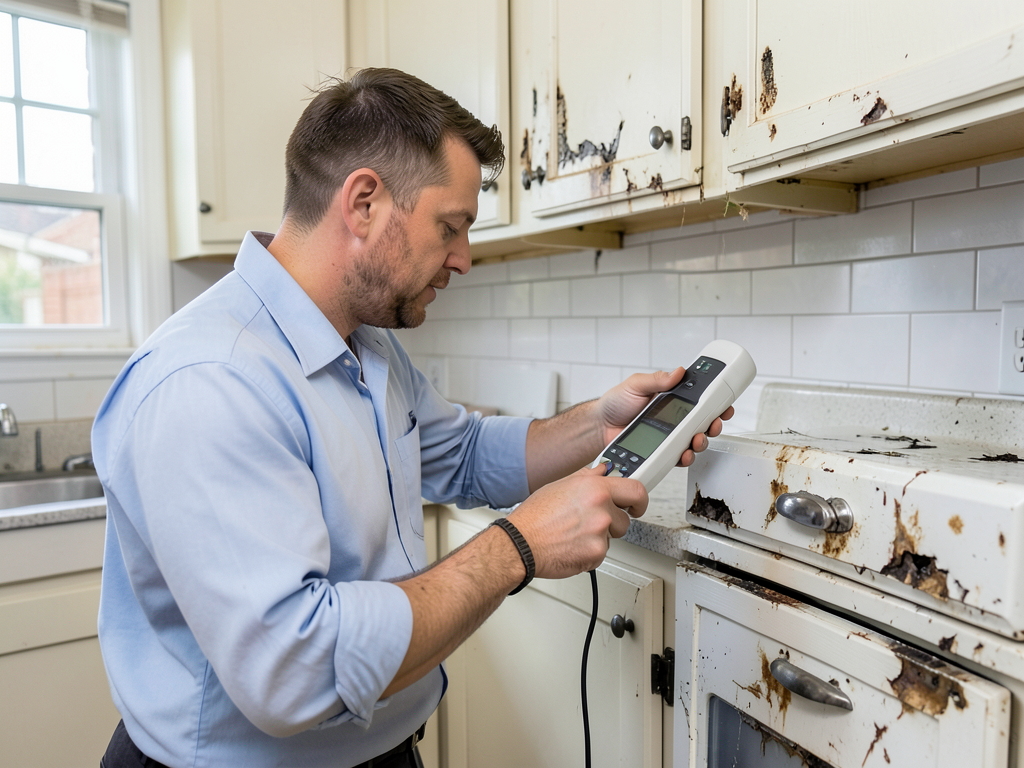
Should You Reface or Replace Your Water Damaged Kitchen Cabinets in Your Wesley Heights Home?
Water damage to kitchen cabinets in Wesley Heights homes can happen fast. A burst pipe behind the wall or a slow leak under the sink turns solid wood into a spongy mess within hours. The humid Potomac summers make things worse. Mold colonies can start growing on wet cabinet surfaces in just 24 to 48 hours. That means you need to act immediately. But should you reface the damaged cabinets or replace them entirely? The answer depends on the material, the water category, and the extent of the damage. Immediate Burst Pipe Response for Arlington VA Apartment Managers.
In this guide we walk you through the diagnostic process. We explain when a quick refacing job will save you thousands and when a full replacement is the only safe option. We also break down DC-specific factors like historic preservation rules and insurance claim requirements that can affect your decision. By the end you will know exactly what to do next.. Read more about Why the wet bar in your West End condo is the most likely place for a hidden leak.
Understanding Water Categories and Why They Matter
Not all water damage is the same. The Institute of Inspection Cleaning and Restoration Certification (IICRC) defines three categories of water that determine whether materials can be saved. IICRC S500 standard.
Category 1 is clean water from a broken supply line or rainwater leak. It poses no immediate health risk. If caught within 24 to 48 hours, cabinets made of solid wood or marine-grade plywood can often be dried and refinished.
Category 2 is gray water from dishwashers, washing machines, or sump pump failures. It contains some contaminants. Materials that are highly porous, like MDF or particleboard, usually need replacement because they absorb water and contaminants deep into their core.
Category 3 is black water from sewage backups, river flooding, or long-standing water that has grown bacteria. The EPA and DC Department of Energy & Environment (DOEE) require full removal of any material touched by Category 3 water. That includes cabinets, even if they look salvageable. The risk of hidden pathogens and mold is too high.
Here is a quick reference table:
| Water Category | Source Example | Typical Material Fate |
|---|---|---|
| Category 1 | Broken supply line | Can refinish if dried within 48 hours |
| Category 2 | Dishwasher overflow | Replace MDF; refinish solid wood |
| Category 3 | Sewer backup | Full replacement required |
Material Matters: MDF vs. Plywood vs. Solid Wood
The type of cabinet material plays a huge role in the repair vs. replace decision. Here is how each reacts to water exposure in a typical Wesley Heights kitchen. EPA mold guidelines.
MDF (Medium-Density Fiberboard) is the cheapest and most common material in modern cabinets. It is made of compressed wood fibers and resin. When it gets wet it swells like a sponge and never returns to its original shape. The glue that holds it together breaks down. Even if the surface looks okay after drying, the internal structure is permanently compromised. Any Category 2 or 3 water exposure means full replacement.
Plywood is more water-resistant than MDF because the layers are glued in alternating grain directions. It can survive minor Category 1 exposure if dried quickly with commercial-grade dehumidifiers. However, the veneers on the surface can still delaminate if water sits long enough. Once delamination starts, the panel loses strength and must be replaced.
Solid wood is the most durable. Hardwoods like maple or oak can often be saved even after Category 2 exposure if the water never reached the cabinet box. The key is rapid drying and antimicrobial treatment. Warping can sometimes be planed out and the surface refinished. But if the core is soaked or mold has colonized the wood, replacement is the only safe option.
Here is a comparison table:
| Material | Water Resistance | Reface Potential | Replace Threshold |
|---|---|---|---|
| MDF | Low | Never | Any Category 2+ exposure |
| Plywood | Medium | Minor delamination only | Deep swelling or delamination |
| Solid Wood | High | Often, if dried fast | Core saturation or mold |
Diagnosing the Damage: The Screwdriver Test
Before deciding on refacing or replacement, you need to assess the damage. The most reliable on-site test is the screwdriver test. Push a flathead screwdriver into the wood at several points. If it sinks in easily, the material has lost its structural integrity. If it meets firm resistance, the core may still be sound. Reliable Sewage Backup Cleaning in Anacostia and Southeast DC.
Next, check for delamination. Look at the corners and edges of the cabinet doors and face frames. If the veneer is peeling or bubbling, water has compromised the adhesive. This is a sign that refacing will not hold up long-term. Fast Water Extraction for Commercial Offices in Downtown DC.
Finally, smell the cabinets. A musty odor indicates active mold growth, even if you do not see black spots yet. In DC’s humid climate, mold can spread behind the surface within 48 hours of water exposure. If you detect that smell, replacement is the safest route. Emergency Water Damage Cleanup for Capitol Hill Rowhouses.
When Refacing Makes Sense in Wesley Heights
Refacing is the process of replacing the cabinet doors, drawer fronts, and veneer while keeping the existing cabinet boxes. It is a cost-effective option if the boxes are still structurally sound and the damage is limited to the surface.
In Wesley Heights, many homes built before 1980 have solid wood cabinets. If a supply line leak caused minor swelling on a few doors but the boxes are dry and firm, refacing can save you 40 to 50 percent compared to full replacement. The new doors and veneer give the kitchen a fresh look without tearing out the entire layout.. Read more about Why your Burleith kitchen ceiling is leaking from the recessed lights during heavy rain.
Refacing also works well for historic preservation. The DC Historic Preservation Office requires approval for major changes in designated historic districts. Keeping the original cabinet boxes can help you get faster approval while still updating the appearance.
However, refacing is not a fix for structural damage. If the boxes are soft, moldy, or show signs of delamination, the new surface will fail within months. In that case, replacement is the only long-term solution.
When Replacement Is the Only Safe Option
Replacement becomes necessary when the damage compromises the safety or longevity of the kitchen. Here are the red flags that point to full replacement.
First, if the water category is 2 or 3, the EPA and DOEE require removal of any porous material that absorbed contaminants. That includes MDF, particleboard, and even plywood if the water wicked into the core. You cannot simply dry and seal these materials.. Read more about How hard water from DC mains is secretly destroying the pipes in your Observatory Circle home.
Second, if the cabinet boxes are soft to the touch or crumble when pressed, they have lost structural integrity. Even if the surface looks okay, the internal bonds are broken. New doors will not stay attached to failing boxes.
Third, if you see black mold or smell a strong musty odor, mold has likely colonized the wood. In DC’s humid summers, mold can spread behind the surface within 48 hours. The only way to ensure it is gone is to remove the affected material entirely.
Fourth, if the damage is widespread across multiple cabinets, the cost of repairing each one can exceed the cost of replacement. In that case, replacing the entire set with new plywood or solid wood cabinets is more economical in the long run.
DC-Specific Factors That Affect Your Decision
Wesley Heights sits in a humid microclimate near the Potomac River. Summer humidity often exceeds 80 percent. That means any water-damaged material will take longer to dry. Extended drying time increases the risk of mold growth behind the surface. In these conditions, rapid professional drying with commercial dehumidifiers is critical.
Another factor is DC’s building code. The District of Columbia Construction Codes require that any material removed due to water damage be replaced with like-kind or better material. If your home has historic solid wood cabinets, you may need to match that quality in the replacement to stay compliant.
Insurance also plays a role. Most DC homeowners policies cover sudden water damage but not long-term leaks. If the damage is from a sudden pipe burst, your policy may pay for replacement. If it is from a slow leak over months, coverage may be denied. Always document the damage with photos before cleanup so your adjuster can see the full extent.
Finally, consider the age of your home. Many Wesley Heights homes were built in the 1920s and 1930s with custom solid wood cabinetry. These cabinets are often higher quality than modern stock options. If the wood is still sound, refacing can preserve that craftsmanship while giving you a modern look.
Cost Comparison for the DMV Area
Cost is often the deciding factor. Here is a rough breakdown for the DC, Maryland, and Virginia metro area in 2026.
| Option | Typical Cost Range | Time to Complete |
|---|---|---|
| Refacing (per linear foot) | $90 – $150 | 3 – 5 days |
| Full Replacement (per linear foot) | $250 – $400 | 1 – 2 weeks |
| Mold Remediation (if needed) | $500 – $6,000 | 1 – 4 days |
Refacing is faster and less disruptive. You can often keep using your kitchen during the process. Replacement takes longer because it involves demolition, new installation, and potential subfloor repairs if water reached the floor.
Keep in mind that these are 2026 averages. Prices can vary based on material choice, labor rates in your specific neighborhood, and whether historic preservation rules apply.
Insurance and Claims Guidance
Navigating insurance claims for water damage can be confusing. Here are the key points to know for DC homeowners.
First, document everything before you start cleanup. Take clear photos of all damaged areas, including close-ups of cabinet surfaces, mold spots, and any visible water lines. This evidence is critical for your adjuster.
Second, understand your policy’s coverage limits. Most policies cover sudden events like pipe bursts but exclude slow leaks or flood damage. If you live in a flood zone near the Potomac, you may need a separate flood insurance policy through the National Flood Insurance Program.
Third, ask your restoration company to provide a detailed scope of work. Insurance companies require a clear breakdown of what will be repaired versus replaced. If mold remediation is needed, that should be listed separately because some policies cap mold coverage. Specialist Mold Remediation for Historic Georgetown Properties.
Fourth, keep all receipts and invoices. Even if your claim is denied, you may be able to deduct the loss on your taxes. The IRS allows casualty loss deductions for uninsured property damage in some cases.
Finally, consider hiring a public adjuster if the damage is extensive. They work for you, not the insurance company, and can help maximize your settlement. In DC, reputable public adjusters charge a percentage of the claim payout, typically 10 to 15 percent.
Making the Final Decision
The decision to reface or replace comes down to three factors: material type, water category, and extent of damage. Here is a simple decision matrix to guide you.
| Material | Water Category | Damage Extent | Recommended Action |
|---|---|---|---|
| MDF | 1 | Surface only | Replace |
| MDF | 2 or 3 | Any | Replace |
| Plywood | 1 | Minor | Reface if dried fast |
| Plywood | 2 | Surface only | Replace |
| Solid Wood | 1 | Minor | Reface |
| Solid Wood | 2 | Core dry | Reface |
| Solid Wood | 3 | Any | Replace |
If you are still unsure, call a professional restoration company for an inspection. They can test the material, identify the water category, and give you a clear scope of work. In Wesley Heights, where humidity and historic homes create unique challenges, expert guidance can save you thousands and prevent future problems.
Frequently Asked Questions
How long does it take for mold to grow on wet cabinets?
In DC’s humid climate, mold can start growing within 24 to 48 hours of water exposure. That is why rapid drying is critical.
Can I just paint over water-damaged cabinets?
No. Painting over damaged material hides the problem but does not fix it. The underlying wood or MDF will continue to deteriorate, and mold can spread behind the paint.
Will my insurance cover cabinet replacement?
It depends on the cause. Sudden pipe bursts are usually covered. Slow leaks or flood damage may be excluded unless you have specific flood insurance.
How do I know if my cabinets are solid wood or MDF?
Remove a door hinge screw and look at the edge of the door. If you see a uniform fine grain, it is likely solid wood. If you see a smooth, almost plastic-like surface, it is MDF or particleboard.
Is refacing environmentally friendly?
Yes. Refacing keeps the existing cabinet boxes out of the landfill and reduces the need for new raw materials. It is a sustainable option if the boxes are still sound.
What if my home is in a historic district?
DC’s Historic Preservation Office may require approval for major changes. Keeping the original cabinet boxes can help you get faster approval while still updating the appearance.
Call (771) 223-8077 Today to Schedule Your Inspection
Water damage waits for no one. The longer you wait, the more your cabinets deteriorate and the higher the risk of mold growth. If you are in Wesley Heights or anywhere in the DC metro area, call (771) 223-8077 now. Our certified technicians will inspect your cabinets, test the material, and give you a clear recommendation. We handle everything from rapid drying to full replacement and work directly with your insurance company to make the process smooth. Do not gamble with your home’s safety. Pick up the phone and call (771) 223-8077 before the next storm hits.
Disclaimer: This article is for informational purposes only and does not constitute professional advice. Always consult with a licensed contractor and your insurance provider for specific recommendations.