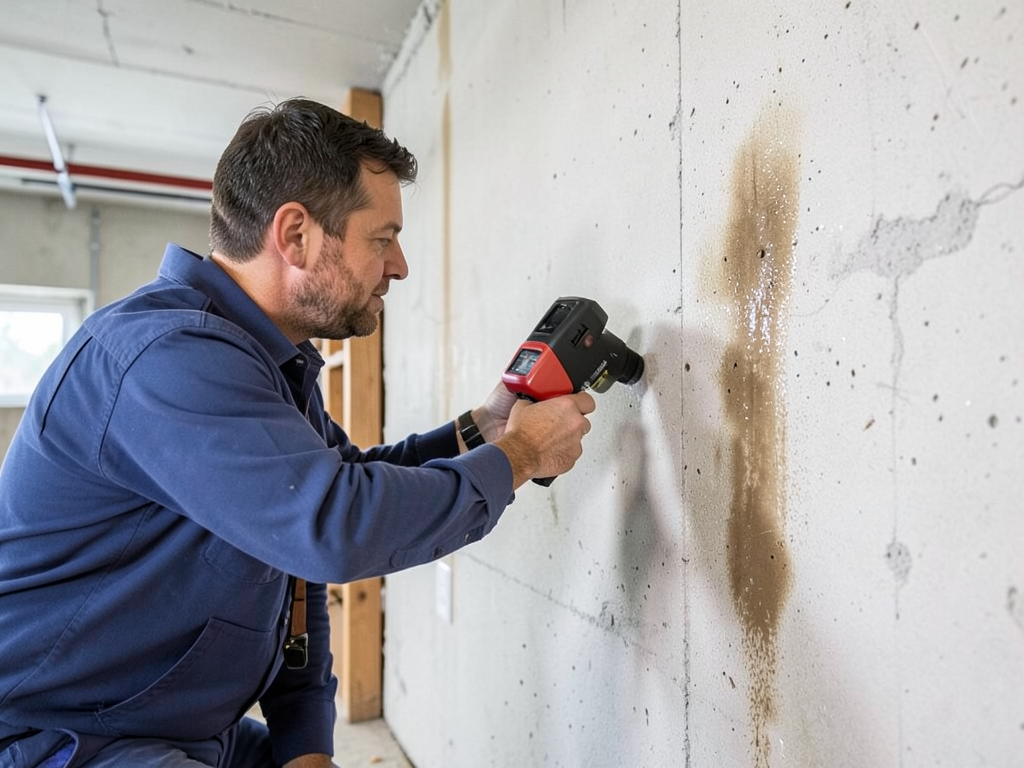







Washington, D.C. receives significant precipitation from spring thunderstorms and occasional tropical systems moving up the Atlantic coast. The district's heavy clay soils do not absorb water quickly, leading to surface runoff and soil saturation near foundations. During wet seasons from March through June, the water table rises in low-lying neighborhoods near the Anacostia and Potomac Rivers. This creates hydrostatic pressure that forces groundwater through concrete pores, carrying dissolved mineral salts that emerge as white powder when the water evaporates. Properties built on filled land or near stream valleys experience the highest efflorescence rates because water accumulates in these topographic low points.
Older Washington, D.C. properties often lack the foundation waterproofing and drainage systems required by modern building codes. Historic rowhouses in Capitol Hill and Georgetown frequently have stone or brick foundations laid without damp-proofing membranes. These porous materials allow water to wick upward from saturated soil through capillary action, depositing mineral salts as moisture evaporates from interior surfaces. Our team understands how to work within historic preservation guidelines while implementing effective moisture control. We coordinate with the Historic Preservation Office when needed to ensure remediation methods meet district requirements for contributing structures in designated historic districts.