
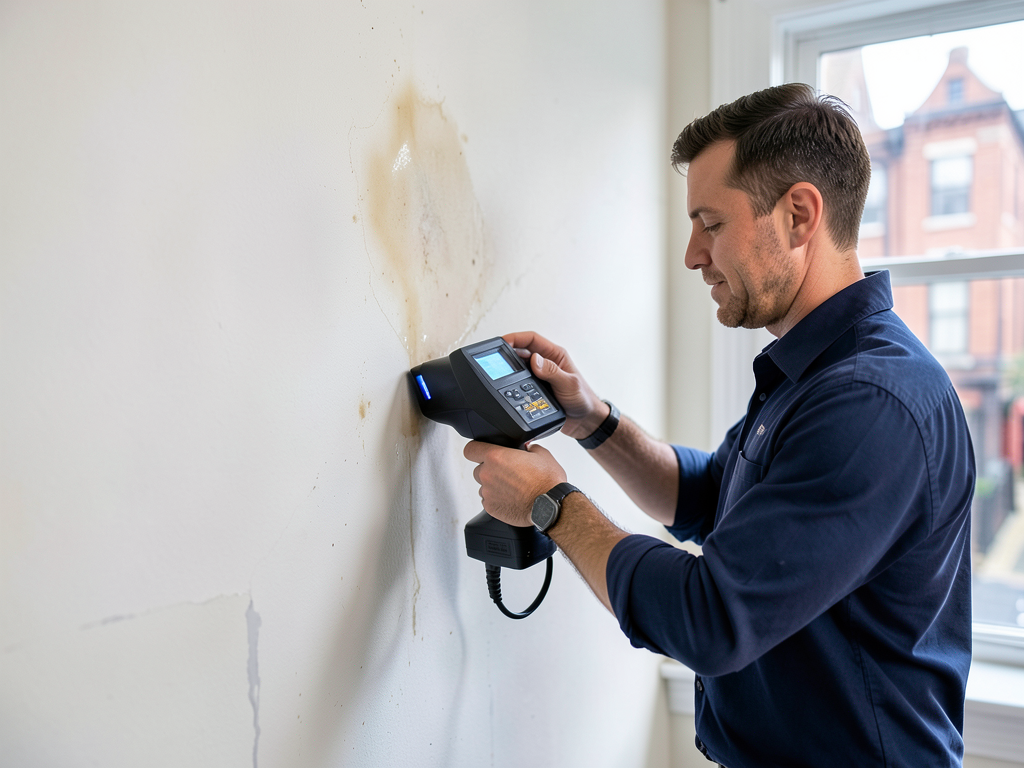
Why Professional Moisture Meters Are Essential for Proving Your DC Home Is Truly Dry
Water damage in Washington DC homes often hides behind walls and under floors long after the visible water is gone. Professional moisture meters detect hidden dampness that DIY tools miss. These specialized instruments map moisture migration patterns using thermal imaging and non-invasive sensors. Without proper moisture mapping, you cannot prove your property is truly dry or prevent costly mold growth. DC’s humid climate and historic building stock make professional moisture verification critical for insurance claims and structural integrity. Fast Water Extraction for Commercial Offices in Downtown DC.
The Hidden Danger in Your Walls
Water travels through building materials in ways most homeowners never see. Capillary action pulls moisture up through drywall and plaster. Gravity causes water to pool in ceiling cavities and subfloors. Temperature differentials create condensation that forms invisible moisture pockets. Professional moisture meters detect these hidden zones using multiple technologies including pin-type probes, capacitance sensors, and thermal imaging cameras. The meters measure moisture content as a percentage or relative scale, revealing problems that surface-level inspection cannot detect. Emergency Water Damage Cleanup for Capitol Hill Rowhouses.
How Thermal Imaging Reveals the Invisible
Infrared cameras detect temperature variations caused by moisture presence. Wet materials conduct heat differently than dry materials, creating thermal anomalies on camera displays. These cameras show temperature differences as small as 0.1 degree Fahrenheit. Cool spots on thermal images often indicate moisture intrusion behind walls or under flooring. The technology works by capturing infrared radiation that all objects emit based on their temperature. Professional thermographers interpret these images to identify moisture migration patterns and structural vulnerabilities unique to DC’s historic row houses and federal-style buildings.
IICRC Standards for Professional Moisture Mapping
The Institute of Inspection Cleaning and Restoration Certification establishes strict protocols for moisture assessment. IICRC S500 Standard requires documentation of moisture content readings in all affected materials. Professionals must establish dry standards by measuring unaffected areas and recording baseline moisture levels. The standard mandates daily monitoring during drying operations and documentation of atmospheric conditions including relative humidity and temperature. These records prove to insurance adjusters that proper drying protocols were followed. DC’s historic preservation requirements often demand even more rigorous documentation for properties in designated historic districts. IICRC S500 standards.
Moisture Content vs. Relative Readings
Different building materials require different moisture assessment approaches. Hardwood flooring typically requires moisture content below 12% for safe installation. Drywall readings above 17% indicate active moisture problems. Plaster walls in historic DC homes may show elevated readings without indicating damage due to their dense composition. Professional meters provide both absolute moisture content percentages and relative comparative readings. The combination helps technicians distinguish between normal material variations and actual water damage. This distinction proves critical when dealing with DC Water’s aging infrastructure that affects many Capitol Hill and Georgetown properties. Water Damage Restoration Bethesda.
Hidden Mold Prevention Through Early Detection
Mold begins growing within 24-48 hours of water exposure in DC’s humid climate. Professional moisture mapping catches problems before visible mold appears. The process identifies moisture pockets where spores can germinate and spread. Early detection prevents the need for extensive mold remediation later. Professional drying equipment then targets these specific problem areas rather than treating entire rooms unnecessarily. This precision approach saves homeowners thousands in restoration costs while protecting indoor air quality. The EPA recommends professional assessment for any water intrusion affecting more than ten square feet of building material. EPA mold guidelines.
Insurance Documentation Requirements
Insurance adjusters require detailed moisture documentation to approve water damage claims. Professional moisture maps serve as legal evidence of damage extent and drying progress. These reports include thermal images, moisture content readings, and atmospheric data logs. Without this documentation, adjusters may deny coverage or require unnecessary demolition. DC insurance companies specifically request IICRC-compliant moisture reports for claims in historic districts. The documentation proves that professional standards were followed and justifies the scope of restoration work performed.. Read more about Understanding Secondary Water Damage and Why Speed Is Everything for Your Heritage Hill Home.
DC’s Unique Building Challenges
Washington DC’s historic architecture creates specific moisture mapping challenges. Federal-style row houses feature shared walls and interconnected moisture pathways. Many Georgetown and Capitol Hill properties have original plaster walls that require specialized testing methods. The city’s high water table affects basement moisture levels differently than suburban properties. Professional moisture meters must account for these local factors when establishing dry standards. The dense masonry construction common in DC requires longer drying times and more aggressive monitoring than modern frame construction.
The Science of Psychrometrics
Psychrometrics measures the thermodynamic properties of air-water vapor mixtures. Professional moisture mapping includes atmospheric monitoring using hygrometers and thermo-hygrometers. These instruments track relative humidity, dew point, and grains of moisture per pound of dry air. The data determines optimal drying conditions and equipment placement. DC’s summer humidity requires aggressive dehumidification strategies that differ from winter drying scenarios. Professional technicians calculate the specific humidity ratio needed to achieve proper material drying without causing secondary damage.
Commercial vs. Residential Mapping Protocols
Commercial properties in DC’s K Street corridor and Rosslyn require different moisture mapping approaches than residential homes. Government buildings and high-rise offices need documentation meeting federal standards. Multi-family properties must address shared wall moisture migration and tenant displacement concerns. Professional moisture mapping for commercial clients includes business interruption analysis and phased drying protocols. The larger building volumes and mechanical systems create unique moisture challenges that residential protocols cannot address.
Non-Destructive Testing Methods
Modern moisture meters offer non-invasive scanning options that preserve historic finishes. Capacitance meters detect moisture through paint, wallpaper, and tile without surface damage. These tools are essential for DC’s historic preservation districts where destructive testing is prohibited. The meters use electromagnetic signals to measure dielectric properties that correlate with moisture content. Professional technicians combine non-invasive scanning with targeted invasive testing only where necessary to verify readings.
Daily Monitoring and Documentation
Professional moisture mapping requires daily progress monitoring throughout the drying process. Technicians record moisture content readings, atmospheric conditions, and equipment performance data. This documentation proves that drying goals are being achieved systematically. The records include thermal images showing drying progress, moisture content charts tracking material recovery, and psychrometric data logs. Insurance companies require this level of documentation to approve final payment on claims.
The Cost of Incomplete Drying
Incomplete moisture removal leads to expensive secondary damage. Hidden moisture causes wood rot, metal corrosion, and adhesive failure. These problems often appear months after the initial water event when warranty coverage has expired. Professional moisture mapping prevents these failures by ensuring complete moisture removal before reconstruction begins. The cost of professional moisture assessment is minimal compared to the expense of replacing rotted structural elements or remediating extensive mold growth. Sump Pump Failure Cleanup.
Advanced Moisture Mapping Technologies
Professional restoration companies use advanced moisture mapping technologies beyond basic meters. Thermal imaging cameras create moisture migration maps showing water travel patterns. Data logging systems track atmospheric conditions 24/7 during drying operations. Some companies use building information modeling software to integrate moisture data with architectural plans. These technologies provide comprehensive documentation that satisfies even the most demanding insurance requirements.
When to Call a Professional
Call a professional moisture mapping specialist when water affects more than ten square feet of building material or when water contacts electrical systems. Professional assessment is essential for sewage backups, foundation leaks, or water from overhead sources. DC’s historic properties require professional evaluation whenever moisture affects original materials or finishes. The cost of professional assessment is minimal compared to the expense of undetected moisture damage. Reliable Sewage Backup Cleaning in Anacostia and Southeast DC.
The Professional Advantage
Professional moisture mapping provides advantages that DIY approaches cannot match. Trained technicians understand building science and moisture behavior in different materials. They have access to commercial-grade equipment that provides more accurate readings than consumer tools. Professionals document their findings in formats that satisfy insurance requirements. Most importantly, they have the experience to interpret readings correctly and recommend appropriate drying strategies.
Call (771) 223-8077 Today to Schedule Your Inspection
Don’t let hidden moisture destroy your DC home or business. Professional moisture mapping provides the documentation and peace of mind you need. Our certified technicians use IICRC-compliant protocols and advanced equipment to ensure complete moisture removal. We serve all of Washington DC including Capitol Hill, Georgetown, and surrounding areas. Call (771) 223-8077 now for emergency response or schedule a comprehensive moisture assessment today.
Frequently Asked Questions
How long does professional moisture mapping take?
Initial moisture mapping typically takes 1-2 hours for an average home. The process includes thermal imaging, moisture content readings, and atmospheric monitoring. Complex commercial properties or historic buildings may require additional time for thorough assessment.
Is moisture mapping covered by insurance?
Most insurance policies cover professional moisture mapping when performed as part of a water damage claim. The documentation helps justify the scope of restoration work and proves that proper drying protocols were followed. Some policies require IICRC-compliant documentation for coverage approval.
Can I use a home moisture meter instead?
Home moisture meters lack the accuracy and features of professional equipment. They cannot perform thermal imaging, track atmospheric conditions, or provide the documentation required by insurance companies. Professional meters also have different calibration settings for various building materials that consumer tools lack.
How do I know if my property is truly dry?
Professional moisture mapping provides objective evidence of dryness through documented moisture content readings below established dry standards. The process includes daily monitoring until all materials reach acceptable moisture levels. Without professional documentation, you cannot prove your property is truly dry.
You may also find this helpful. Why That Wet Patch Around Your Burleith Fireplace Is More Than Just a Little Rain.
You may also find this helpful. When Condensation on Your Cathedral Heights Windows Is Actually a Sign of Significant Water Intrusion.