Choosing the Right Flooring for a Damp Basement in Your Brightwood Park Home
Brightwood Park basements face unique moisture challenges due to DC’s high water table and the neighborhood’s older infrastructure. The right flooring choice means the difference between a finished space that lasts decades and one that fails after the first heavy rain. This guide breaks down exactly which materials can handle Brightwood Park’s specific conditions and why subfloor preparation matters more than the top layer. DC Department of Energy & Environment flood maps.
Why Brightwood Park Basements Stay Damp
The clay-heavy soil in Northwest DC creates hydrostatic pressure against foundation walls. Water seeps through hairline cracks in concrete slabs and wicks upward through porous materials. Brightwood Park’s mix of early 20th-century rowhouses and single-family homes often has original drainage systems that struggle with today’s heavier rainfall patterns. Fast Water Extraction for Commercial Offices in Downtown DC.
According to the DC Department of Energy & Environment flood maps, areas near Rock Creek Park tributaries show increased groundwater saturation during wet seasons. This means basement floors here experience more than just surface moisture—they deal with constant vapor drive from below. EPA mold prevention guidelines.
Top Waterproof Flooring Materials That Actually Survive
Traditional hardwood and carpet absorb moisture like sponges. Within 24-48 hours of a sump pump failure, organic materials show warping, staining, and mold growth. The materials below resist water damage and can be dried if flooding occurs. Emergency Water Damage Cleanup for Capitol Hill Rowhouses.
Luxury Vinyl Plank (LVP) with SPC Core
Stone Plastic Composite (SPC) vinyl plank resists buckling even when concrete slabs sweat. The rigid core handles temperature swings common in DC basements without expanding or contracting. Most quality SPC products carry a 20-mil wear layer that withstands foot traffic and occasional moisture exposure.
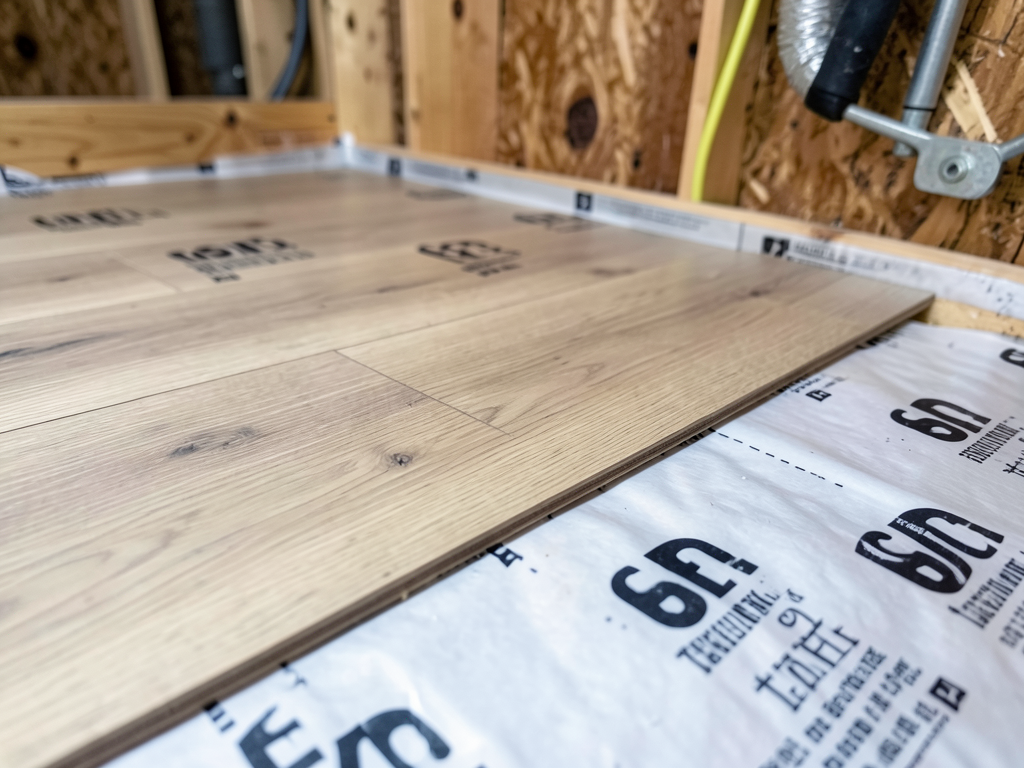
Installation requires a 6-mil vapor barrier beneath the underlayment. Without it, moisture condenses under the planks and creates a mold-friendly environment. The DC Plumbing Code (2021) requires vapor retarders in below-grade installations where relative humidity exceeds 75%.
Ceramic and Porcelain Tile
Tile offers zero water absorption when properly installed. Porcelain rates at 0.5% or less water absorption versus 3-5% for standard ceramic. Both require a waterproof membrane underlayment like Schluter Ditra to prevent cracking from concrete movement. Water Damage Restoration Bethesda.
The main drawback is cold surface temperature. Radiant heating mats can solve this but add $3-5 per square foot to installation costs. Tile also transmits sound more than softer materials, making it less ideal for media rooms or bedrooms.
Epoxy and Polyaspartic Coatings
These industrial-grade coatings bond directly to concrete, creating a seamless moisture barrier. Professional-grade epoxy withstands chemical spills, UV light, and heavy foot traffic. Polyaspartic versions cure faster and resist yellowing better than traditional epoxy.
Surface preparation determines success. Contractors grind concrete to CSP-3 profile (Commercial Surface Preparation level 3) before application. Skipping this step means the coating peels within months. Most DIY kits fail because users skip proper acid etching and moisture testing.
Materials to Avoid in Brightwood Park Basements
Engineered hardwood with MDF cores swells irreversibly when wet. Even “water-resistant” versions fail because the veneer layer delaminates. Laminate flooring with particleboard cores turns to mush within hours of water exposure.. Read more about What to Do When Your Clogged Floor Drain Floods Your University Terrace Utility Room.
Carpet holds moisture against concrete, creating perfect conditions for mold growth. The EPA recommends removing carpet from any area where relative humidity stays above 60% for extended periods. In Brightwood Park, that includes most basements during summer months. Wet Carpet & Padding.
Subfloor Systems That Make Any Flooring Work Better
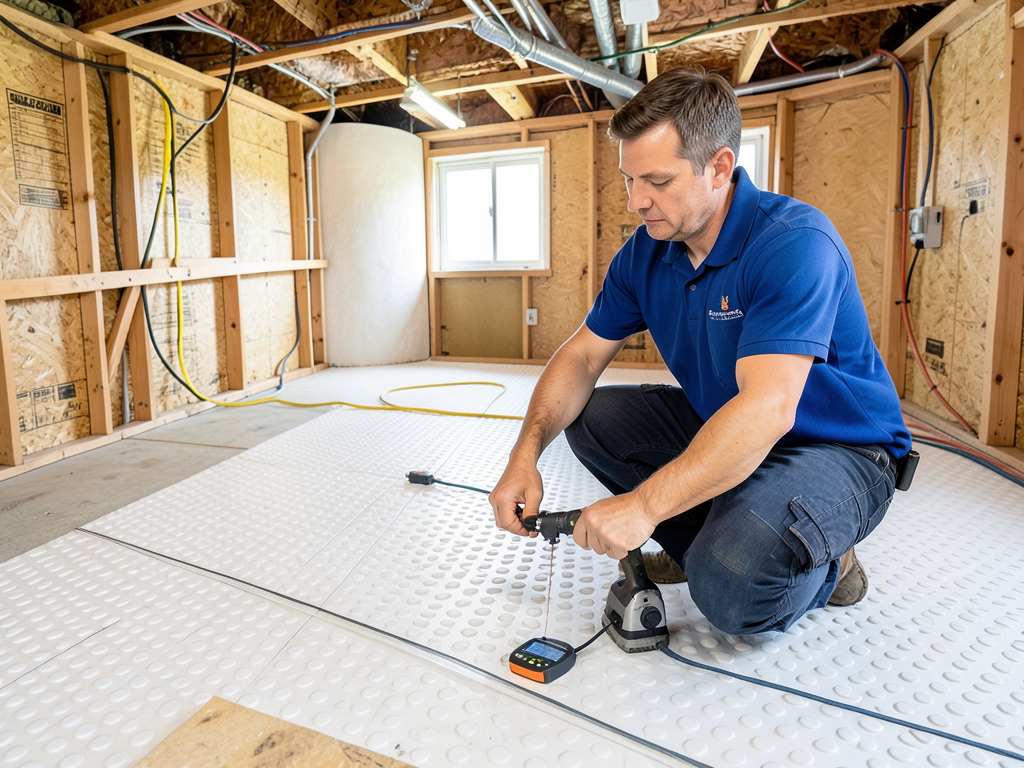
A dimple mat subfloor creates an air gap between concrete and finished flooring. Systems like Delta-FL or DRIcore allow minor water infiltration to drain away while providing insulation. The air gap also prevents “sweating” by allowing concrete to breathe.. Read more about Managing Persistent Water Seepage and Concrete Damage in Rosslyn Parking Garages.
Installation requires leveling the concrete first. Self-leveling compound costs $1.50-2.50 per square foot but fixes the uneven slabs common in homes built before 1940. Skipping this step causes soft spots and premature wear.
Moisture Testing Before Installation
Calcium chloride tests measure moisture vapor emission rate (MVER). Results above 3 pounds per 1,000 square feet per 24 hours require additional mitigation. Many Brightwood Park basements test at 5-8 pounds, especially near exterior walls.
Relative humidity probes give instant readings. Levels above 80% RH indicate active moisture problems that need addressing before flooring installation. Simple plastic sheet tests (ASTM D4263) can identify problem areas in 24 hours.
Cost Comparison for DC Area Basements
| Material | Material Cost/SF | Installation Cost/SF | Total Cost/SF | Flood Survival Rating |
|---|---|---|---|---|
| SPC Vinyl Plank | $2.50-4.00 | $2.00-3.00 | $4.50-7.00 | 9/10 |
| Porcelain Tile | $3.00-8.00 | $4.00-7.00 | $7.00-15.00 | 10/10 |
| Epoxy Coating | $2.00-4.00 | $3.00-5.00 | $5.00-9.00 | 8/10 |
| Dimple Mat System | $2.50-3.50 | $3.00-4.00 | $5.50-7.50 | 7/10 |
DC Building Code Requirements for Basement Flooring
The District of Columbia Construction Codes require Class I vapor retarders (≤0.1 perm) in basements with in-slab ductwork. The International Residential Code (IRC) Section R506.2.3 mandates a 6-mil polyethylene vapor barrier under concrete slabs on grade.
For historic properties in Brightwood Park, the DC Historic Preservation Office may restrict subfloor modifications. In these cases, floating floor systems that don’t attach to existing structure often get approval. Always check with the preservation office before starting work on homes built before 1950.. Read more about Glue-Down Wood Floors vs Floating Planks (Which One Handles DC Humidity and Leaks Better?).
Real-World Performance in DC Conditions
During the July 2023 flash floods, homes with SPC vinyl flooring in Brightwood Park saw minimal damage. The material dried within 24 hours using commercial dehumidifiers. Homes with engineered hardwood required complete replacement.
Tile performed best overall but showed grout line staining in homes without proper sealing. Epoxy-coated floors resisted water but showed scratches from debris carried in by floodwater.
Maintenance Tips for Basement Flooring Longevity
- Clean spills within 2 hours to prevent staining on porous surfaces
- Run dehumidifiers during summer months to keep RH below 60%
- Inspect sump pump operation monthly during rainy season
- Reseal grout lines annually in high-traffic areas
- Check for efflorescence (white mineral deposits) monthly
Efflorescence indicates active moisture migration. Cleaning it without addressing the source leads to recurring problems. Professional moisture mitigation may be necessary if deposits return within weeks.
When to Call a Professional
Call immediately if you notice:
- Musty odors that persist after cleaning
- White, chalky deposits on concrete
- Cupping or buckling in existing flooring
- Visible mold growth in corners or along walls
- Standing water that returns within 24 hours of cleanup
These signs indicate active moisture problems that flooring alone cannot fix. Professional assessment includes moisture mapping, humidity monitoring, and recommendations for permanent solutions.
Making the Final Decision
Start with a moisture assessment. If readings show high vapor drive, choose materials rated for wet areas. For basements with occasional dampness but no active leaks, SPC vinyl offers the best balance of durability, comfort, and cost.
Consider your use case. Media rooms benefit from acoustic underlayment. Home gyms need impact-resistant surfaces. Guest suites require warmth and comfort. The right material depends on how you’ll use the space, not just moisture resistance.
Don’t forget about future flooding scenarios. Even with perfect installation, DC’s changing climate means more frequent heavy rain events. Materials that can be dried and reinstalled save thousands compared to complete replacement.
Frequently Asked Questions
Can I install hardwood in my Brightwood Park basement?
Standard hardwood will fail in any basement with moisture issues. Engineered hardwood with a plywood core offers minimal improvement but still risks warping. Only install hardwood above grade or in basements with perfect moisture control and vapor barriers.
How long does waterproof flooring last in a basement?
Quality SPC vinyl lasts 15-20 years with proper maintenance. Tile and epoxy can last 25+ years. The limiting factor is usually subfloor movement or moisture problems, not the flooring material itself.
Should I install a French drain before flooring?
If you experience regular water intrusion, a French drain system costs $3,000-8,000 but prevents thousands in flooring damage. For occasional dampness without standing water, focus on vapor barriers and proper subfloor preparation instead.
What’s the best flooring for a basement home gym?
Rubber flooring tiles or rolls provide impact absorption and moisture resistance. They install over existing concrete or dimple mats. Avoid foam-based products that trap moisture and develop odors.
Ready to Upgrade Your Basement Flooring?
The right flooring choice prevents costly water damage and creates a comfortable living space. Before you invest in materials, get a professional moisture assessment. Brightwood Park’s unique soil conditions and aging infrastructure require specific solutions that generic flooring advice won’t address.
Call (771) 223-8077 today to schedule your basement moisture inspection. Our team understands DC’s specific challenges and can recommend materials that will actually survive our climate. Don’t wait until the next storm floods your basement—get the right flooring now and protect your investment for decades.
Pick up the phone and call (771) 223-8077 before the next heavy rain hits. Your basement deserves flooring that can handle whatever DC weather throws at it.