
Can You Save Engineered Wood Floors After a Water Leak in Your NoMa Apartment?
When water hits engineered wood flooring in a NoMa apartment the clock starts ticking. The thin veneer layer bonded to a plywood or HDF core reacts differently than solid hardwood. In Washington DC’s humid climate even 24 hours of moisture exposure can trigger irreversible delamination or mold growth beneath the planks. The good news is that many engineered floors can be saved if you act fast and use the right drying protocols. Fast Water Extraction for Commercial Offices in Downtown DC.
The first 48 hours determine whether you’re looking at professional restoration or full replacement. Quick moisture mapping with thermal imaging and desiccant dehumidification can often preserve the floor’s structural integrity. But if the core has already swelled or the adhesive has broken down you may be facing a more complex and costly repair. EPA Mold Guidelines.
How Engineered Wood Differs From Solid Hardwood in Water Emergencies
Engineered wood flooring consists of a thin hardwood veneer (typically 2-6 mm) glued to a multi-layer plywood or high-density fiberboard core. This construction makes it more dimensionally stable than solid wood but also more vulnerable to delamination when water penetrates the joints. Emergency Water Damage Cleanup for Capitol Hill Rowhouses.
The core layers expand when wet causing the floor to cup or crown. Unlike solid hardwood which can often be sanded flat after drying engineered wood may not have enough veneer thickness to refinish. Once the adhesive bond fails between layers the floor loses structural integrity.. Read more about Can You Save Your Persian Rug After a Major Water Leak in Your Kalorama Townhome?.
In NoMa’s newer high-rise buildings engineered flooring is the standard due to its cost-effectiveness and ability to handle radiant heating systems. However this also means water damage events are more common as plumbing runs through concrete slabs and shared walls. Water Damage Restoration Bethesda.
Signs of Water Damage in Engineered Wood Flooring
Early detection is critical for successful restoration. Look for these warning signs within 24-48 hours of a leak:
- Cupping – edges of planks rise higher than the center creating a concave surface
- Crowning – center of planks rises higher than edges creating a convex surface
- Buckling – entire planks lift away from the subfloor
- Delamination – veneer layer peels or separates from the core
- Dark spots or discoloration – indicates water penetration and potential mold
- Musty odors – suggests active mold growth beneath flooring
The NoMa area’s high-rise buildings often have concrete subfloors with vapor barriers. Water can travel laterally through these systems making the source of the leak difficult to pinpoint without moisture meters and thermal imaging.. Read more about Glue-Down Wood Floors vs Floating Planks (Which One Handles DC Humidity and Leaks Better?).
Professional Restoration Process for Engineered Wood
Successful restoration follows a systematic approach based on IICRC S500 standards for water damage. Here’s what professional restoration looks like: IICRC S500 Standards.
- Emergency Response and Assessment
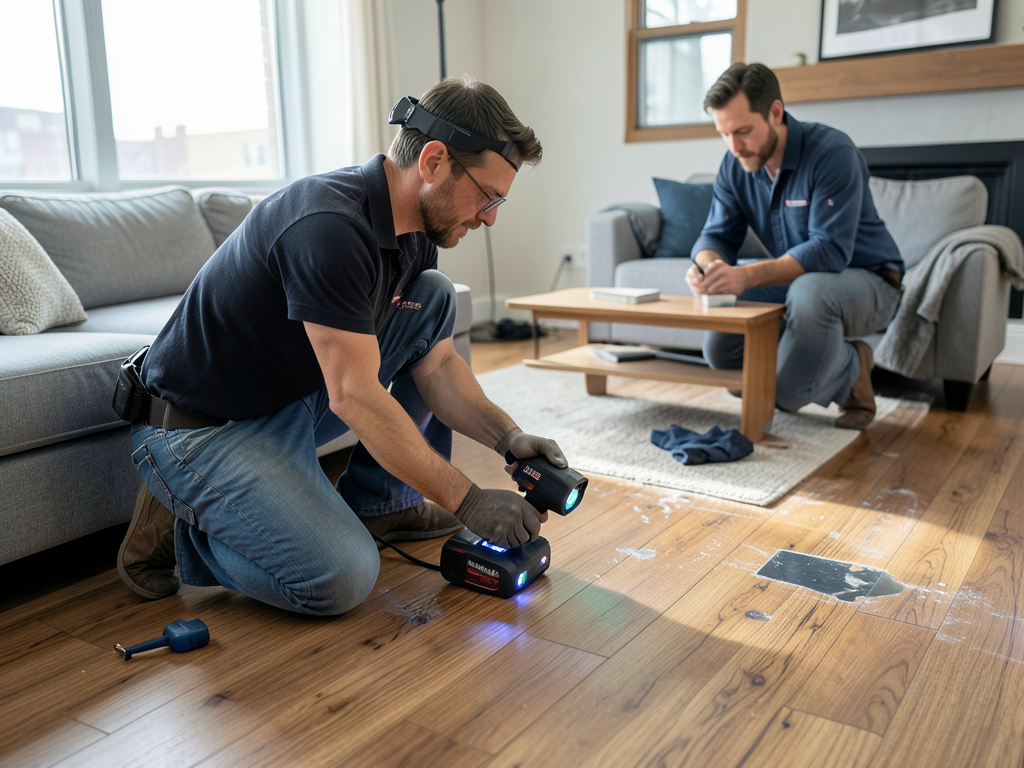
Technicians arrive within 60-90 minutes to assess damage scope. They use moisture meters to check surface and subsurface readings and thermal imaging cameras to locate hidden moisture pockets in walls and under flooring.
- Water Extraction
High-powered truck-mounted extractors remove standing water. For engineered floors this step is critical – aggressive extraction prevents further absorption into the core layers.
- Moisture Mapping
Technicians create a detailed moisture map showing affected areas. This helps determine whether drying in place is possible or if selective plank removal is needed.
- Controlled Drying
Low-grain refrigerant (LGR) dehumidifiers and air movers create a drying chamber. Desiccant dehumidifiers may be used for concrete subfloors common in NoMa apartments. The goal is reducing moisture content to 6-9% for wood.
- Monitoring
Daily moisture readings track progress. The drying process typically takes 3-5 days depending on the extent of saturation and environmental conditions.
- Evaluation for Repair vs Replacement
Once dry technicians assess whether the veneer layer can be sanded and refinished or if plank replacement is necessary.
The key difference between DIY attempts and professional restoration is the use of psychrometric data. Professionals monitor temperature relative humidity and dew point to create optimal drying conditions that prevent secondary damage.
When to Call a Professional Immediately
Not all water damage situations are DIY-friendly. Call (771) 223-8077 immediately if you notice: Immediate Burst Pipe Response for Arlington VA Apartment Managers.
- Water that has been sitting for more than 24 hours
- Visible mold growth on or under flooring
- Swollen or buckled planks that don’t respond to basic drying
- Water from contaminated sources (sewage backups appliance failures)
- Water that has traveled through multiple rooms or floors
In NoMa’s high-density living environment water can spread quickly through shared plumbing and HVAC systems. What starts as a small leak in one unit can affect multiple apartments if not addressed immediately.
Cost Considerations for Engineered Wood Restoration
Professional restoration costs vary based on damage extent but typically range from $500 to $5000 for engineered wood flooring. Factors affecting cost include:
| Damage Level | Restoration Approach | Typical Cost Range | Success Rate |
|---|---|---|---|
| Light Surface Moisture | Drying in Place | $500 – $1500 | 90% |
| Moderate Saturation | Selective Plank Removal + Drying | $1500 – $3000 | 70% |
| Severe Delamination | Partial Replacement + Refinishing | $3000 – $5000 | 40% |
Full replacement of engineered wood flooring in a typical NoMa apartment bedroom (12×15 ft) can cost $2500-$4000 including materials and labor. Restoration is often 40-60% less expensive than replacement when successful.
Preventing Future Water Damage in Your NoMa Apartment
Prevention is always less expensive than restoration. Consider these protective measures:
- Install water leak detectors near appliances and under sinks
- Know the location of your main water shut-off valve
- Inspect washing machine hoses annually for cracks or bulges
- Clean AC condensate lines quarterly to prevent overflows
- Check refrigerator water lines for leaks every six months
NoMa’s high-rise buildings often have centralized mechanical systems. Building management should be notified immediately of any water issues to prevent spread to neighboring units.
Insurance Considerations for Water-Damaged Flooring
Most standard renters or homeowners insurance policies cover sudden and accidental water damage including flooring restoration. However coverage varies significantly:
| Water Source | Coverage Likelihood | Typical Deductible |
|---|---|---|
| Burst Pipe | High | $500 – $1000 |
| Appliance Failure | High | $500 – $1000 |
| Roof Leak | Medium | $1000 – $2000 |
| Flood (external) | Low (requires separate policy) | $1000+ |
Document damage with photos and videos before any cleanup begins. This documentation is crucial for insurance claims. Professional restoration companies can provide detailed reports that insurance adjusters require. Sump Pump Failure Cleanup.
Why Choose Local DC Restoration Experts
Water damage restoration isn’t just about equipment – it’s about understanding local conditions. Washington DC’s high humidity levels (average 65-70% year-round) create unique challenges for wood floor drying. The freeze-thaw cycles common in DC winters can cause pipes to burst when least expected.
Local experts understand NoMa’s building codes and the specific construction methods used in newer luxury apartments. They know how to work with building management and can navigate the logistics of high-rise restoration projects.
Professional restoration teams carry commercial-grade equipment that homeowners cannot rent. Industrial dehumidifiers air movers and moisture detection tools make the difference between successful restoration and costly replacement.
Frequently Asked Questions
How long does it take to dry engineered wood floors?
Professional drying typically takes 3-5 days depending on the extent of saturation and environmental conditions. The process involves daily monitoring to ensure moisture content reaches safe levels before refinishing or replacement decisions are made.
Can I sand and refinish engineered wood after water damage?
It depends on the veneer thickness. Most engineered floors have 2-6mm of hardwood on top. If the veneer is at least 3mm thick and the damage is not severe it can often be sanded and refinished. Thinner veneers cannot be sanded without damaging the core layers.
Will my insurance cover engineered wood floor restoration?
Most policies cover sudden and accidental water damage including flooring restoration. Coverage depends on the water source and your specific policy terms. Document all damage before cleanup and contact your insurance company promptly after discovering the issue.
What’s the difference between cupping and crowning?
Cupping occurs when plank edges rise higher than the center creating a concave surface. This happens when moisture is absorbed from the bottom. Crowning is the opposite – the center rises higher than the edges creating a convex surface. This occurs when the top surface dries faster than the bottom.
How can I prevent engineered wood water damage?
Install water leak detectors near appliances use mats in high-risk areas and maintain plumbing systems regularly. In NoMa apartments know your building’s emergency procedures and have building management contact information readily available.
Take Action Before It’s Too Late
Water damage to engineered wood floors is a race against time. Every hour of delay increases the risk of permanent damage and mold growth. If you’re seeing signs of water damage in your NoMa apartment don’t wait to see if it will dry on its own.
Professional restoration can often save your floors and save you thousands in replacement costs. The key is quick response and proper drying techniques based on IICRC standards.
Call (771) 223-8077 today to schedule your inspection. Our DC-based team is ready to respond 24/7 with the equipment and expertise to restore your engineered wood floors. Don’t let water damage become a costly replacement project – let us help you save what matters most.
Pick up the phone and call (771) 223-8077 before the next storm hits. Your floors and your peace of mind are worth protecting.
You may also find this helpful. Why the overflow hole in your Chinatown bathroom sink isn’t actually saving your floors.